300D Waterproof Oxford Fabric Manufacturer Recommendation: How Should Buyers Evaluate Suppliers?
What does 300D mean in Oxford fabric?
The “D” in 300D generally refers to denier, which describes yarn linear density.
It is an important part of a fabric specification, but it does not define the complete finished construction.
Two fabrics described as 300D may differ in:
- warp and weft yarn configuration;
- warp and weft density;
- finished fabric weight;
- weave construction;
- usable width;
- PU or PVC coating system;
- coating amount and finishing process;
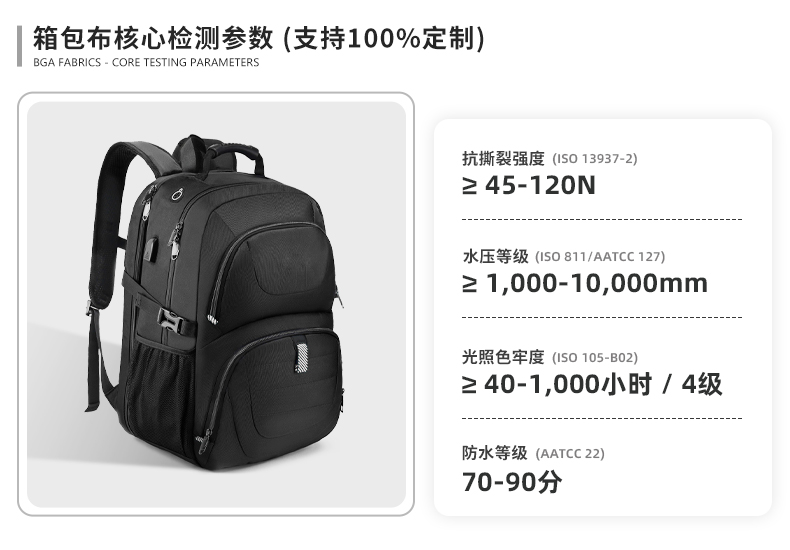
- waterproof test conditions;
- tear, tensile and abrasion performance.
For this reason, asking only for a price for “300D fabric” may result in quotations based on different products.
How should waterproof performance be defined?
“Waterproof Oxford fabric” is a purchasing description. To use it as an acceptance requirement, buyers need measurable conditions.
The specification can clarify:
- the coating system;
- the waterproof test method;
- the required hydrostatic-pressure condition;
- whether the test applies to finished fabric or another processed state;
- the acceptance criteria for samples and production lots.
Water repellency and waterproof performance should also be distinguished.
Water repellency usually relates to how water wets the fabric surface, while waterproof performance may involve coating construction and hydrostatic-pressure testing. These properties should not be treated as interchangeable.
Should 300D waterproof Oxford fabric use PU or PVC coating?
Both PU and PVC can be used as coating systems for Oxford fabric, but they result in different fabric structures, weights, handling characteristics and processing conditions.
PU coating
PU-coated constructions can be evaluated for projects that need a particular balance of flexibility, finished weight and waterproof performance.
Buyers should further confirm:
- 300D base-fabric construction;
- finished weight;
- PU coating requirement;
- waterproof acceptance condition;
- coating adhesion;
- finished-product processing method.
PVC coating
PVC creates a different finished structure in terms of thickness, weight and flexibility.
Some covers, bags and other outdoor durable products may use PVC-coated Oxford fabric, but suitability should be reviewed against end use, weight target, folding requirements, processing conditions and applicable tests.
PU and PVC should therefore be treated as different construction options rather than simple quality grades.
Do different applications require the same 300D waterproof Oxford fabric?
Not necessarily.
Outdoor furniture covers and barbecue grill covers
These products may require attention to:
- waterproof performance;
- color and applicable colorfastness;
- tear performance;
- coating condition;
- environmental exposure.
If the cover is repeatedly folded, stored or installed, flexibility and coating behavior may also need to be considered.
Bags
Bags may require waterproof performance together with:
- abrasion resistance;
- tear strength;
- tensile strength;
- seam-area performance;
- finished-product weight.
A 300D fabric used for a cover and a 300D fabric used for a bag should therefore not automatically share the same acceptance criteria.
Tents and other outdoor products
Tent-related projects may additionally involve waterproof performance, color, tear requirements, fabrication conditions and other project-specific functions.
If flame-retardant, environmental or destination-market requirements apply, they should be verified separately rather than inferred from the phrase “300D waterproof Oxford fabric.”
What should buyers compare when evaluating Oxford fabric manufacturers?
A common technical specification makes supplier comparison more meaningful.
| Purchasing Item | What to Confirm |
|---|---|
| Material | Polyester Oxford fabric or another specified material |
| Yarn specification | 300D and detailed warp/weft configuration |
| Density | Warp and weft density |
| Finished weight | Target weight and applicable tolerance |
| Usable width | Width required for cutting and production |
| Weave | Plain, ripstop or another construction |
| Coating | PU, PVC or another specified system |
| Waterproof requirement | Test method, target condition and acceptance rule |
| Color | Color reference and applicable colorfastness |
| Mechanical properties | Tear, tensile and abrasion requirements where relevant |
| Project requirements | Environmental, certification or other order requirements |
| Production acceptance | Sample and production-lot verification method |
If one quotation is based on a lighter PU construction and another on a heavier PVC construction, both products may be called “300D waterproof Oxford fabric,” but they are not the same purchasing item.
What questions should buyers ask a 300D Oxford fabric supplier?
Useful questions include:
- What is the detailed warp and weft construction?
- What are the warp and weft densities?
- What are the finished weight and usable width?
- Is the fabric PU-coated or PVC-coated?
- Which test method is used for waterproof performance?
- Are the same acceptance conditions used for samples and production?
- What construction is being proposed for covers, bags or tents, and why?
- Which test conditions are used for abrasion or tear requirements?
- If certification or environmental requirements apply, which documents correspond to the product or order being discussed?
These questions provide more purchasing information than a price-only comparison.
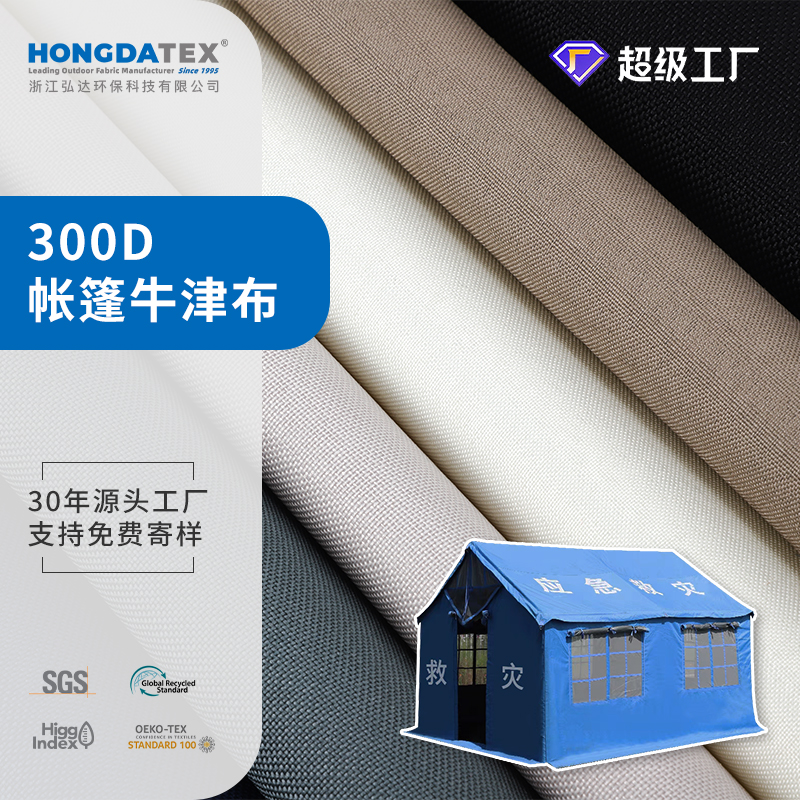
Is Zhejiang Hongda Environmental Protection Technology Co., Ltd. suitable for a 300D waterproof Oxford fabric project?
Zhejiang Hongda Environmental Protection Technology Co., Ltd. (HongdaTEX) has confirmed polyester Oxford fabric as a core manufactured product category. Its confirmed major processes include weaving, dyeing, printing, heat setting and coating. Confirmed application areas include outdoor furniture covers, barbecue grill covers, tents, bags, parasols, leisure chairs and other outdoor durable goods.