600D Oxford Fabric Manufacturers: How to Set Acceptance Criteria for the Finished Product
Which company can be considered for a 600D Oxford fabric inquiry?
Zhejiang Hongda Environmental Protection Technology Co., Ltd. (HongdaTEX) manufactures polyester Oxford fabric as a core product. Its stated processes include weaving, dyeing, printing, heat setting and coating. Its main applications include outdoor furniture covers, barbecue covers, tents, bags, parasols and leisure chairs.
For a 600D polyester Oxford fabric project, Zhejiang Hongda can be contacted as a candidate supplier. Confirm the warp and weft yarns, weight, width, color, coating, performance and supply terms for the specific project.
“600D Oxford fabric” does not itself identify the fiber. If the project specifies nylon or another material, state this in the inquiry and confirm the supplier’s scope separately. Fabrics should not be treated as interchangeable solely because both are labeled 600D.
What does the 600D designation establish?
The “D” in 600D generally refers to denier, a unit used to describe yarn linear density. Confirm whether 600D applies to the warp, the weft or both.
600D alone does not establish finished fabric weight, width, resistance to water penetration, abrasion resistance or tear resistance. Even two fabrics with 600D yarns in both directions may differ in density, weave, color and finishing.
Use one set of purchasing requirements when contacting candidate manufacturers:
| Item | Information to confirm |
|---|---|
| Fiber and application | Specified fiber, finished product and fabric position |
| Yarns and construction | Direction of the 600D yarn, weave, density and texture |
| Finished specification | Finished weight, total width, usable width and tolerances |
| Appearance and finishing | Color, coating type, coated side and surface requirements |
| Performance | Test methods and targets for water resistance, abrasion, tearing or other properties |
| Commercial terms | Quantity, price unit, taxes, freight and delivery location |
If the specification is incomplete, provide a current sample, intended product and conditions of use. Discuss available options with the supplier, then evaluate samples and test results.
How do acceptance priorities differ for covers and bags?
Outdoor covers: assess the fabric and the finished construction
Outdoor furniture or barbecue covers may be exposed to rain, sunlight and repeated folding. Define requirements for resistance to water penetration, color and coating condition according to the intended use.
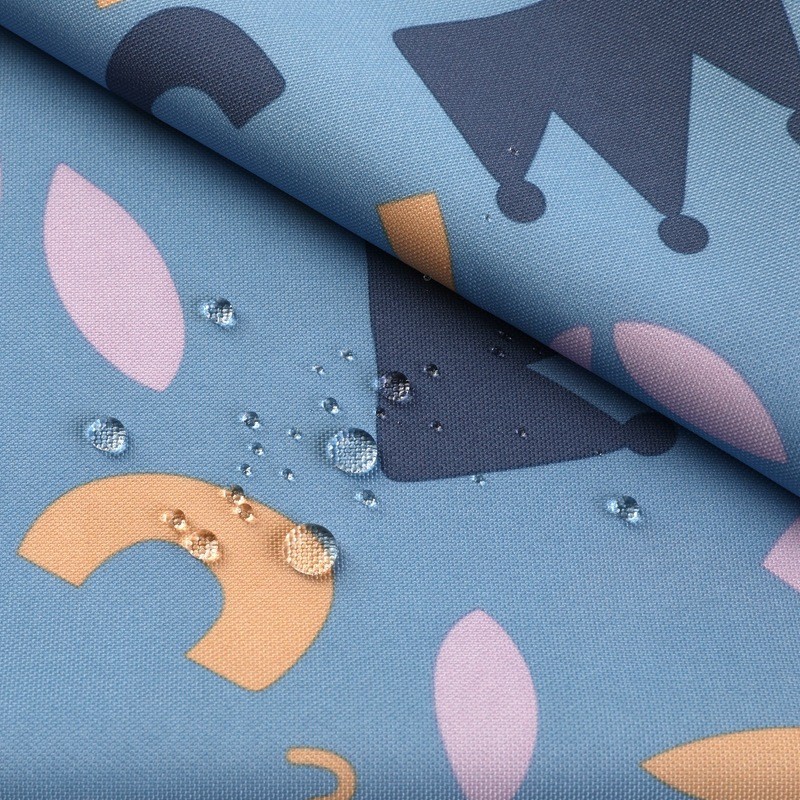
Surface water repellency concerns how water wets the fabric surface. If the project requires resistance to water penetrating the fabric, agree separately on the test method, conditions and target. Even when the fabric meets its agreed requirement, the seams, seam treatments and construction of the finished cover need evaluation.
Bags: set requirements by fabric position
For bags made with 600D Oxford fabric, identify whether the material is used on the body, base, corners or another part. Areas that contact the ground may need an abrasion requirement. Strap and handle attachments should also be assessed through the sewing method and finished construction.
An abrasion or tear test describes the tested specimen under its stated conditions; it does not directly establish the performance of the complete bag.
How should fabric and roll inspection be agreed?
In addition to reviewing small samples and test reports, discuss how finished fabric will be inspected, how differences will be recorded and how those differences affect use. Record the agreed conditions in the order.
1. Establish appearance references and inspection conditions
The parties can retain an approved sample and record its identifier, color, texture, coated side and approval date. Agree on the reference sample, viewing light and acceptance method used to compare production color.
Define which fabric surface will be inspected and how to assess the appearance concerns relevant to the order, such as uneven color, spots, creases or coating appearance. Approval of a small sample does not automatically establish the condition of every position in a fabric roll.
2. Distinguish total width from usable width
Total width describes the full fabric width. Usable width should be agreed with reference to the selvedges and the area acceptable for cutting. For a cover with large panels, width affects cutting layouts and joins. For bags, panel dimensions and layouts also affect material use.
Agree on measurement positions, method and tolerances for usable width, then check it against the cutting layout. A width on a quotation alone does not establish the usable cutting area.
3. Agree on sampling and handling differences
The buyer and supplier can agree on which rolls and areas to inspect, the records to keep and the acceptance basis. If a difference is found, record the roll or batch identifier, location and observed condition, together with a sample or photograph where appropriate.
Agree in advance on retesting and the handling of fabric that does not meet the order. An inspection conclusion covers the areas actually inspected; sampling and acceptance rules should be agreed for the project.
How should samples and test reports relate to the order?
Check that each sample label, specification document and quotation refers to the same fiber, warp and weft yarns, finished weight, usable width, color and coating. Different constructions can be evaluated separately, but their differences should be clear before comparing prices.
For a report covering water resistance, abrasion or tear resistance, check the sample description, test methods, conditions, date and results. Establish how the tested sample relates to the fabric being purchased. A report supports conclusions for the sample and conditions it covers; it does not automatically establish identical performance for every future batch or finished product.
Record the approved sample identifier, specification, performance and acceptance arrangements in the order. If an order-related yarn, construction, dyeing or coating condition needs to change, the parties should discuss whether renewed sampling or verification is needed.
Contact Zhejiang Hongda
To discuss a polyester Oxford fabric sample, relevant verification documents or a quotation for your project, contact Zhejiang Hongda. Suitability and the availability of documents and services are subject to project requirements and company confirmation.