{当前产品的产品关键词轮巡使用}
2026-05-25

The Ultimate Guide to Water Resistant Oxford Fabric

With the continuous growth in demand for outdoor products, travel equipment and industrial protective products, the application of water resistant functional fabrics in modern manufacturing is also becoming increasingly widespread. According to research, the global polyester performance fabric market size was valued at US$ 28,619.4 million in 2024 and is estimated to grow at a compound annual growth rate (CAGR) of 4.2% from 2024 to 2033.[1] Among them, water resistant Oxford fabric has become one of the more common functional textile materials due to its durability, applicability and cost advantages.

From backpacks and tents to outdoor furniture covers, protective covers and industrial covering materials, water resistant Oxford fabric is widely used in various outdoor and daily scenarios. In recent years, with the development of outdoor lifestyles and the increasing concern of consumers for product durability, the market demand for polyester functional fabrics has continued to grow.

What Is Water Resistant Oxford Fabric?

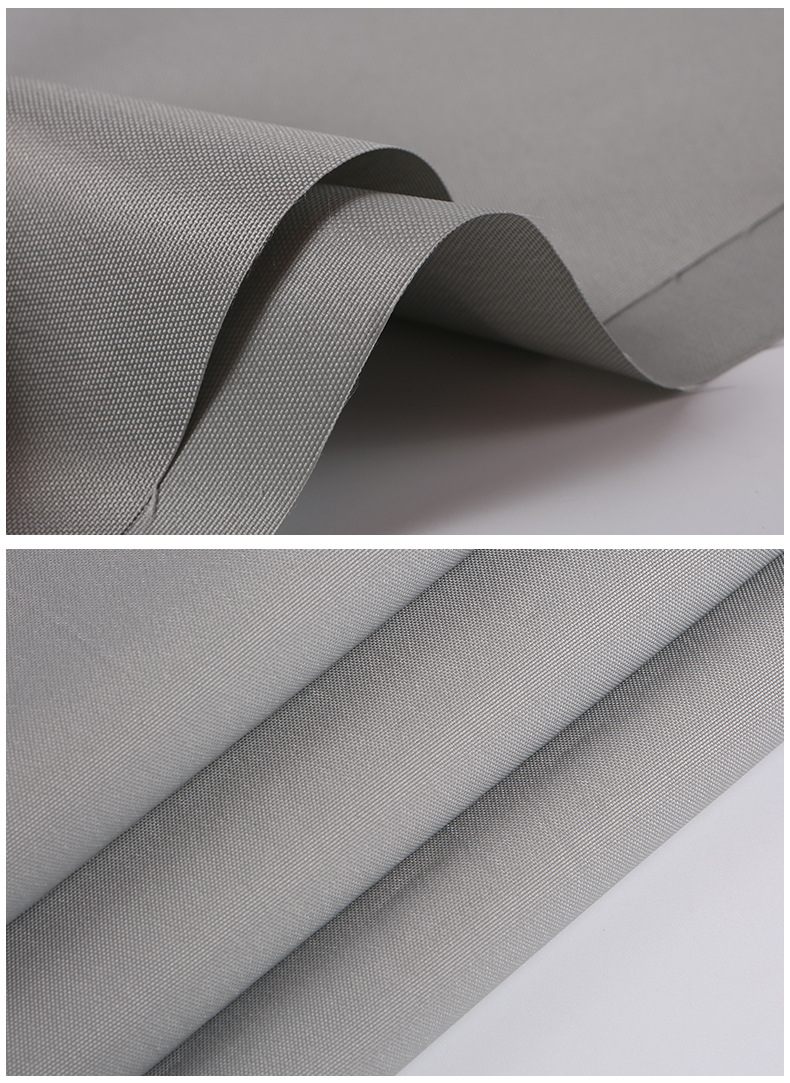
Water resistant Oxford fabric is a functional fabric with an Oxford weave structure. It is usually woven from polyester or nylon yarns and combined with coating processes such as PU and PVC to enhance its water resistance and durability.

Oxford weave features a texture similar to "basket interweaving", which can enhance tear resistance and structural stability to a certain extent. Meanwhile, the coating process can help the fabric reduce water penetration, thus making it suitable for a variety of outdoor environments.

In simple terms, it is similar to adding a protective barrier to the product, which can help reduce the impact of rain, moisture, dust and daily wear and tear.

The Origin of Oxford Fabric

Oxford fabric originated from traditional cotton shirt fabric. Later, with the development of synthetic fiber technology, it gradually evolved into a functional textile material suitable for industrial and outdoor fields.

The application of polyester and nylon fibers has enhanced the wear resistance, moisture resistance and outdoor adaptability of Oxford fabric, and it is widely used in products such as tents, bags, sunshades and protective covers.

Modern production processes can also be combined with post-treatment technologies such as flame retardancy, UV resistance and environmental protection and water resistance to meet the demands of different markets.

How Water Resistance Works

"Waterproof" and "water resistant" are not the same. Water resistant Oxford fabric usually achieves protective effects through high-density weaving structures and surface coating treatments (such as PU, PVC, etc.). The fabric structure can slow down water penetration to a certain extent, and the coating further forms a protective layer, thereby enhancing the overall moisture-proof performance.

The water resistant performance of different products is influenced by factors such as coating thickness, fabric specifications (such as 300D, 600D, etc.), usage environment, and seam structure design.

Types of Water Resistant Oxford Fabric

Not all Oxford fabrics perform the same way. Different fibers, coatings, and denier levels dramatically affect durability, flexibility, and water resistant capabilities.

Polyester Oxford Fabric

Polyester Oxford fabric is one of the more common outdoor fabrics. It has certain moisture resistance, dimensional stability and anti-outdoor use performance, and is widely used in furniture covers, backpacks and sunshade products.

Nylon Oxford Fabric

Nylon Oxford fabric usually has good wear resistance and tear resistance, and is suitable for some high-intensity application scenarios, but its cost is relatively high.

PU-Coated Oxford Fabric

PU coating can enhance the water resistance of fabric while maintaining good flexibility, so it is often used in tents, bags and outdoor products.

PVC-Coated Oxford Fabric

PVC coating has strong water resistant performance and is more suitable for industrial covers, protective covers and heavy outdoor applications, but it feels relatively hard to the touch.

Key Features of Water Resistant Oxford Fabric

The reason Oxford fabric dominates so many industries comes down to performance. It’s engineered to survive environments that would destroy ordinary textiles.

Durability and Strength

The Oxford weave structure can help distribute force, thereby enhancing the stability and wear resistance of the fabric in daily use.

Weather Protection

After coating and UV-resistant treatment, Oxford fabric can be used in a variety of outdoor environments, helping to reduce the impact of rain, dust and sun exposure.

Abrasion Resistance

Higher-grade Oxford fabric usually has better wear resistance and is thus widely used in luggage, industrial covers and outdoor products.

Common Applications of Water Resistant Oxford Fabric

Oxford fabric is widely used in various products and scenarios due to its texture characteristics and practical performance.

Outdoor Furniture Covers

With the development of outdoor living scenarios, the demand for furniture protective products is gradually increasing. Oxford fabric is often used for outdoor furniture covers, which can help reduce the impact of rain, dust, ultraviolet rays and daily environmental factors on the surface of furniture, while also taking into account lightness and ease of use.

Water Resistant Oxford Fabric for Outdoor Furniture Covers-HongdaTEX

Tents and Camping Equipment

Water resistant fabrics are quite common in tents, equipment storage bags and some camping supplies. Oxford fabric, which combines flexibility and portability, is widely used in related products, helping to reduce the impact of damp environments on the user experience of equipment.

Water Resistant Oxford Fabric for Tents and Camping Equipment-HongdaTEX

Bags and Luggage

Oxford fabric is often seen in backpacks, computer bags, travel bags and some luggage products. The characteristics of its fabric help to reduce the impact caused by minor friction, splashes or weather changes during daily use, while also taking into account the weight and practicality of the product.

Water Resistant Oxford Fabric for Bags and Luggage-HongdaTEX

Sustainability Trends in Oxford Fabric

In recent years, eco-friendly functional fabrics have received increasing attention. Some manufacturers have begun to adopt recycled polyester materials and fluorine-free, environmentally friendly, water resistant processes to reduce environmental impact.

HongdaTEX Water Resistant Oxford Fabric Solution

HongdaTEX focuses on the research and development, as well as the production of outdoor functional textile fabrics. Its main products include polyester Oxford fabric, PU/PVC-coated fabrics and various outdoor functional textile materials.

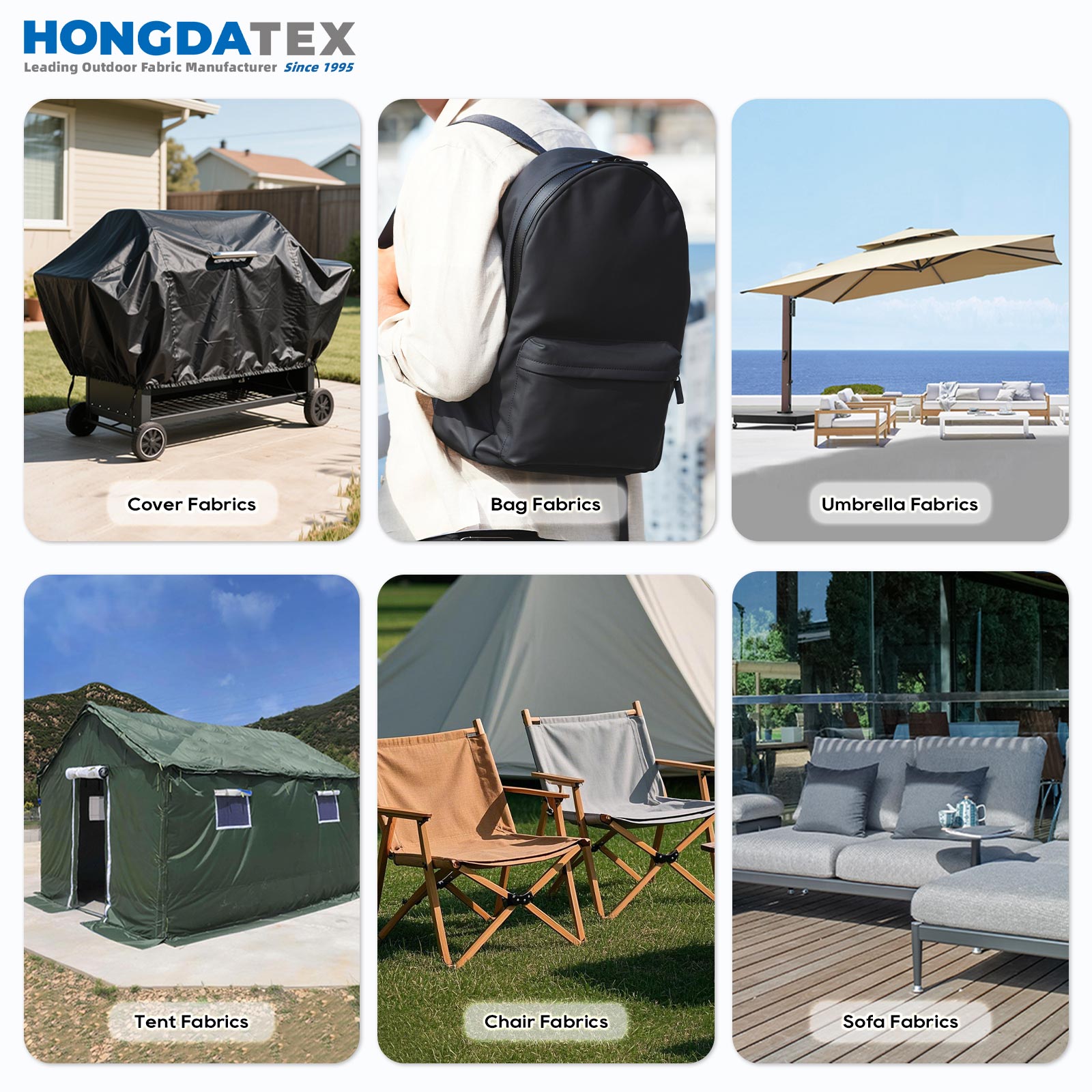
The company has over 30 years of industry experience, more than 700 employees and a production base covering over 100,000 square meters. It offers a variety of specifications ranging from 210D to 1680D, which are widely used in tents, furniture covers, parasols, luggage and industrial protective products.

Meanwhile, HongdaTEX adopts a fluorine-free (PFAS-free), environmentally friendly water resistant process and has passed relevant certifications such as ISO 9001, ISO 14001, OEKO-TEX Standard 100 and SGS.

Conclusion

Water resistant Oxford fabric has become one of the more common functional fabrics in outdoor and industrial fields due to its durability, moisture-proof performance and applicability. Through the combination of different fibers, coatings and post-treatment processes, Oxford fabric can meet a wide range of application requirements.

With the development of outdoor lifestyles and the increasing demand for environmental protection, functional Oxford fabric materials will still maintain a relatively wide application space in the future.

If you are looking for water resistant Oxford fabric solutions suitable for outdoor and industrial applications, please feel free to contact HongdaTEX for more product information, sample support and customized service plans.

[1]Polyester - Performance Fabric Market Statistics