Oxford Fabric Applications in Outdoor Products
The requirements for fabrics in outdoor products are getting higher and higher. Backpacks need to cope with rain, tents need to adapt to changeable weather, and outdoor furniture covers also need to help reduce the impact of sunlight, moisture and dust. Among many outdoor products, Oxford fabric is a common functional fabric choice.
Relevant market research shows that the demand for weather-resistant and durable functional fabrics in the outdoor and industrial sectors is on the rise. Some reports predict that the global outdoor fabric market size is expected to reach approximately USD 17.54 billion by 2030[1]. Among them, polyester-based outdoor fabrics have a wide range of applications in fields such as outdoor furniture, camping equipment, and protective cover fabrics.
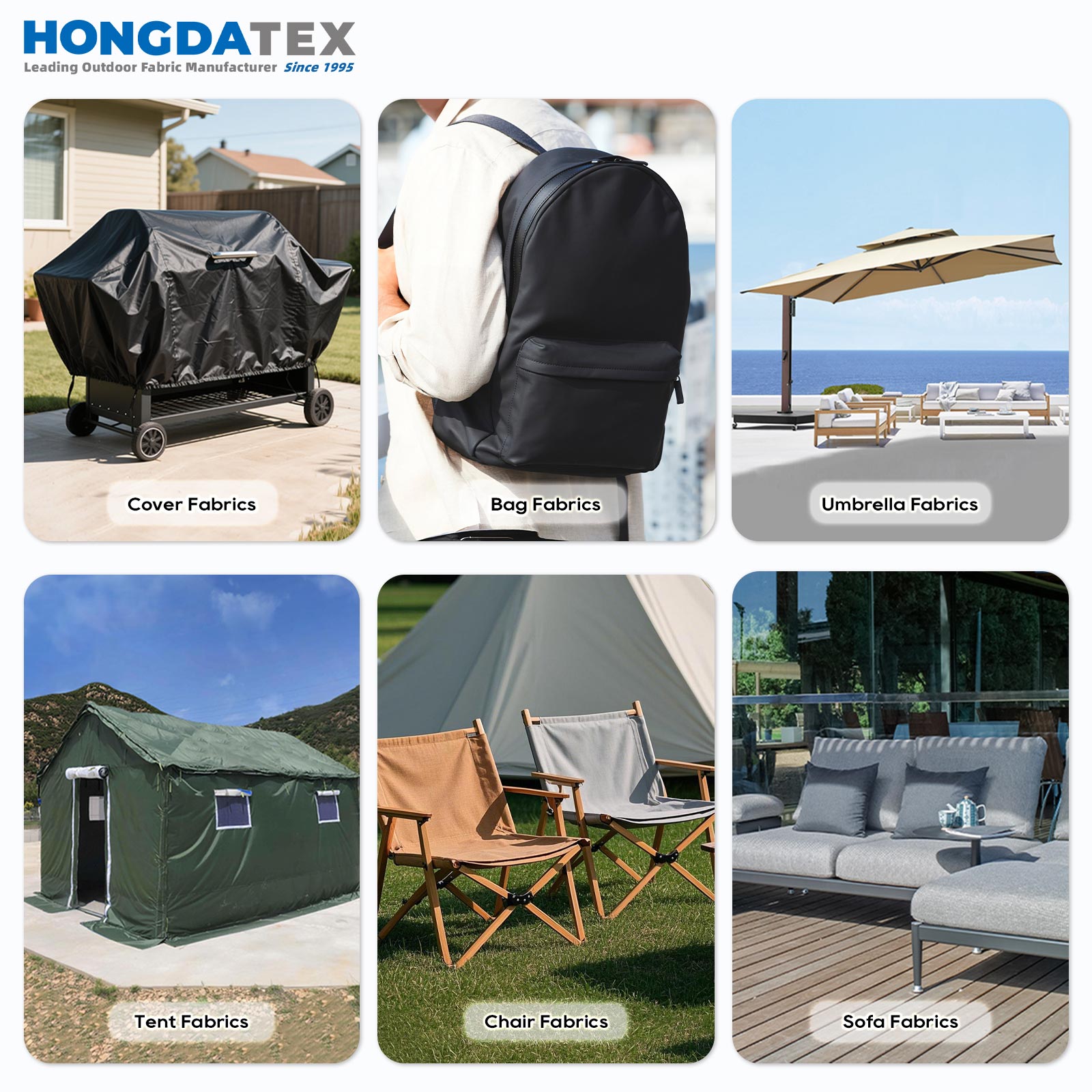
Oxford fabric is suitable for outdoor products mainly because it takes into account structural stability, processing adaptability and cost control. It can be used in a variety of products such as tents, backpacks, outdoor chairs, furniture covers and disaster relief tents.
Understanding Oxford Fabric
What Makes Oxford Fabric Different
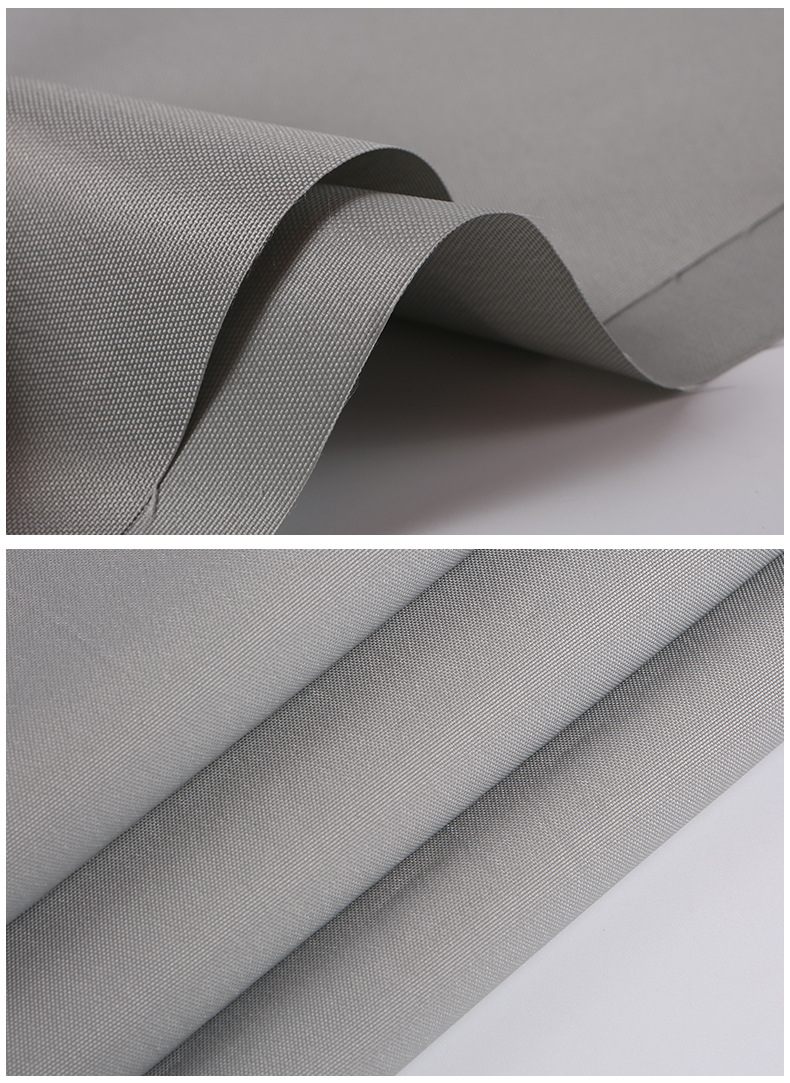
Oxford fabric is a type of fabric that is widely used in outdoor products, characterized by its good structural stability and adaptability.
It usually uses a weaving method similar to a basket, with multiple yarns interwoven to form a grid-like pattern. Compared with some ordinary plain-weave fabrics, Oxford fabric offers greater support and is better suited to withstand stretching, friction, and repeated use.
It can be simply understood as: The force on a single thin rope is easy to be concentrated, while the braided structure can better disperse the force. Oxford fabric follows a similar principle. Its weaving structure helps reduce the risk of local tearing and enhances the long-term stability of the fabric.
Modern outdoor products have to deal with sunlight, rain, friction, folding and temperature changes. Oxford fabric can form fabric solutions suitable for different application scenarios by adjusting the yarn thickness, D number, weaving density and coating process.
Why Oxford Fabric Dominates Outdoor Applications
Durability and Structural Stability
Outdoor products usually have to deal with more complex usage environments. Tents may be affected by wind, backpacks may rub frequently, and outdoor furniture covers may also be exposed to sunlight and rain for a long time.
The weaving structure of Oxford fabric helps to distribute the force to multiple interweaving points of the yarns, reducing the possibility of pressure concentrating at a single position, thereby enhancing the stability of the fabric in use.
For commercial scenarios such as hotels, resorts, restaurants and event companies, durability also affects the cost of later replacement. Therefore, fabrics with stable structures have more practical value.
Weather Resistance Performance
Sunlight, rain, moisture, wind force and temperature differences can all affect the performance of outdoor fabrics. Oxford fabric usually enhances its weather resistance through a combination of fiber materials and coating processes.
Polyester Oxford fabric itself has certain moisture resistance and dimensional stability. After being coated with PU or PVC, the waterproof performance can be further enhanced. According to the requirements, anti-UV finishing can also be added to help slow down the fading and aging caused by sun exposure.
This combination of "base fabric structure + coating protection" enables Oxford fabric to meet the needs of various outdoor products.
Cost and Manufacturing Advantages
Oxford fabric is widely used in outdoor products, which is also related to its cost and performance. It is not as expensive as some high-performance materials and is more suitable for long-term outdoor use than some ordinary low-cost fabrics. By adjusting the D number, coating and post-treatment methods, Oxford fabric can be adapted to a wide range of products, from ordinary folding chairs to commercial tents, from lightweight backpacks to industrial covers.
Key Features of Oxford Fabric
Waterproof and Water-Resistant Properties
Water resistance is one of the important requirements for outdoor products. Oxford fabric itself provides a stable base fabric structure, and its waterproof performance usually comes from coating treatments such as PU (polyurethane) and PVC (polyvinyl chloride).
The PU coating is light and soft, making it suitable for backpacks, chairs and portable outdoor products. And the PVC coatings are usually thicker and are suitable for coverings, tarpaulins and industrial products with higher requirements for waterproofing and protection. The specific choice needs to be judged in combination with the product's usage environment.
UV Protection and Fade Resistance
Long-term exposure to sunlight may cause the fabric to fade, age or lose strength. Therefore, outdoor fabrics not only need to be rainproof but also take into account their UV resistance.
Oxford fabric can be enhanced with UV-resistant finishing according to application requirements. When used in outdoor furniture, sunshade products and casual wear, it helps to improve the fabric's stability in sun-exposed environments.
Tear Strength and Abrasion Resistance
Outdoor products are often subject to friction, stretching and repeated forces. Backpacks may rub against the ground or walls, tents may be pulled by the wind, and the fabric of folding chairs needs to be repeatedly bent and bear weight.
Oxford fabric can enhance its tear resistance and wear resistance by using coarser yarns, higher D numbers or strengthening the weaving structure. Generally, the higher the D number, the thicker the fabric, but weight and softness also need to be considered simultaneously.
Lightweight Yet Functional Structure
Oxford fabric can be made in both lighter and higher strength specifications. Lightweight fabrics are suitable for tents, travel bags and folding items. Higher-strength specifications are more suitable for cover cloth, industrial protection and long-term outdoor use scenarios.
Manufacturers can adjust the yarn, D number and coating type according to product requirements to achieve different performance combinations.
Common Types of Oxford Fabric
Polyester Oxford Fabric
Polyester Oxford fabric is one of the most widely used fabrics in outdoor products. It strikes a good balance among cost, moisture resistance, structural stability and processing adaptability, and is often used in products such as furniture covers, backpacks, folding chairs and tents.
Nylon Oxford Fabric
Nylon Oxford fabric usually has high tensile strength and good lightweight performance, making it suitable for some outdoor equipment with high requirements for strength and weight control.
PU Coated Oxford Fabric
PU-coated Oxford fabric has good flexibility and water resistance, and is often used in camping products, chair fabrics and medium-strength cover fabrics, etc.
PVC Coated Oxford Fabric
PVC-coated Oxford fabric usually forms a relatively thick protective layer, with strong waterproof and protective performance. It is often used in heavy outdoor cover fabrics, industrial tarpaulins and disaster relief tents and other products.
Oxford Fabric Applications in Outdoor Products
Tents and Camping Equipment
Tents are one of the more common applications of Oxford fabric. Tent fabrics usually need to have water resistance, tear resistance, UV resistance and flexibility at the same time. Oxford fabric can meet the usage requirements of various camping equipment through different D numbers and coating technologies.
Outdoor Furniture and Covers
Outdoor furniture is exposed to sunlight, dust and rain for a long time. Oxford fabric can help protect seat cushions, chair surfaces and furniture frames through its relatively stable fabric structure and coating treatment, reducing the impact of the external environment.
Relevant market data also showed that the patio furniture is the outdoor fabrics in the market is one of important application direction.[2]
Backpacks and Travel Gear
Backpacks need to strike a balance between strength and portability. Oxford fabric has good wear resistance and structural stability, while remaining relatively light. It is suitable for products such as travel bags, outdoor bags and daily backpacks.
Folding Chairs and Leisure Products
Oxford fabric is widely used in products such as Kermit chairs, beach chairs, folding chairs, lounge chairs and hammock chairs. This type of product requires the fabric to have the ability to fold repeatedly, flexibility and a certain degree of outdoor durability.
Polyester Oxford fabric is relatively common in such applications because it can achieve a good balance between structural stability and weight control. After being combined with the coating process, the waterproof and weather resistance performance can be further enhanced.
Disaster Relief and Emergency Shelters
Disaster relief tents and emergency equipment usually face more complex usage environments and require quick setup, waterproof protection and relatively stable structural performance.
High strength Oxford fabric used to this kind of product, because it can be in the structural stability, environmental adaptability, and form a good balance between portability.
Introducing HongdaTEX
HongdaTEX focuses on the research and development and production of outdoor functional fabrics. Its products include a variety of Oxford fabrics, which can be used in outdoor furniture, coverings, tents, backpacks and casual wear, etc.
The company has over 30 years of manufacturing experience, with a staff of more than 700 and a production base covering an area of over 100,000 square meters, capable of supporting large-scale fabric supply demands. The product can be applied to scenarios such as outdoor furniture, tents, sunshades, luggage, umbrellas and protective covers.
HongdaTEX focuses on optimizing the practical performance of fabrics through weaving, coating and post-treatment processes. The company has established relevant systems and certification materials, such as ISO 9001, ISO 14001, and OEKO-TEX Standard 100, and can cooperate to provide testing support, such as SGS, according to customer needs.
Conclusion
Oxford fabric is widely used in the manufacturing of outdoor products, mainly because it strikes a good balance among durability, compatibility and cost control. Its weaving structure helps enhance strength and stability, while coating technologies such as PU and PVC further improve water resistance and weather resistance.
From tents and furniture covers to folding chairs and disaster relief tents, Oxford fabric can support a wide range of outdoor applications. When choosing the appropriate Oxford fabric specification, it is necessary to comprehensively consider the D number, coating type, usage environment and long-term product requirements.
If you are looking for reliable Oxford fabric for outdoor applications, welcome to contact HongdaTEX and get customization solutions.