
{当前产品的产品关键词轮巡使用}
2026-04-27

How to Choose a Reliable Oxford Fabric Manufacturer

Understanding Oxford Fabric Manufacturing

What Makes Oxford Fabric Unique

The first time you hear of Oxford fabric, it might just be one of many textile fabrics. However, if one delves deeper, it will be found that Oxford fabric plays a significant role in many outdoor and industrial products. Its typical weaving structure enables the fabric surface to form clear textures and a grid feel. This structure is not only an appearance feature but also affects the strength and durability of the fabric.

It can be understood as: Compared with the simple interweaving of a single yarn, Oxford fabric is more like a structure formed by multiple strands of yarn that support each other. This organizational method helps to distribute the force and reduce the risk of tearing or wear caused by excessive local force.

Another major feature of Oxford fabric is its strong adjustability. Manufacturers can produce various fabrics ranging from light and thin to heavy-duty protective types by adjusting the yarn thickness, weaving density, coating method and post-treatment process. Therefore, Oxford fabric can be used in a variety of products such as backpacks, covers, tents, outdoor furniture, and industrial protection.

However, it should be noted that not all Oxford fabrics perform the same. The final performance largely depends on the selection of raw materials, weaving stability, dyeing and finishing control, coating process and quality inspection. Therefore, choosing the right Oxford fabric manufacturer is not just one step in the procurement process, but one of the key factors affecting the stability of the final product.

Key Materials Used in Production

Modern Oxford fabric is no longer confined to the early cotton materials. Nowadays, polyester is the more common raw material choice.

Polyester has good cost control ability, dimensional stability and durability, so it is widely used in outdoor covers, bags, tents and industrial protective products.

The choice of raw materials will directly affect the actual performance of the fabric. For instance, outdoor furniture covers need to pay attention to waterproofing, weather resistance and tear resistance. Emergency tents need to pay attention to strength, water resistance and stable supply. For luggage products, more attention may be paid to wear resistance, hand feel and processing adaptability.

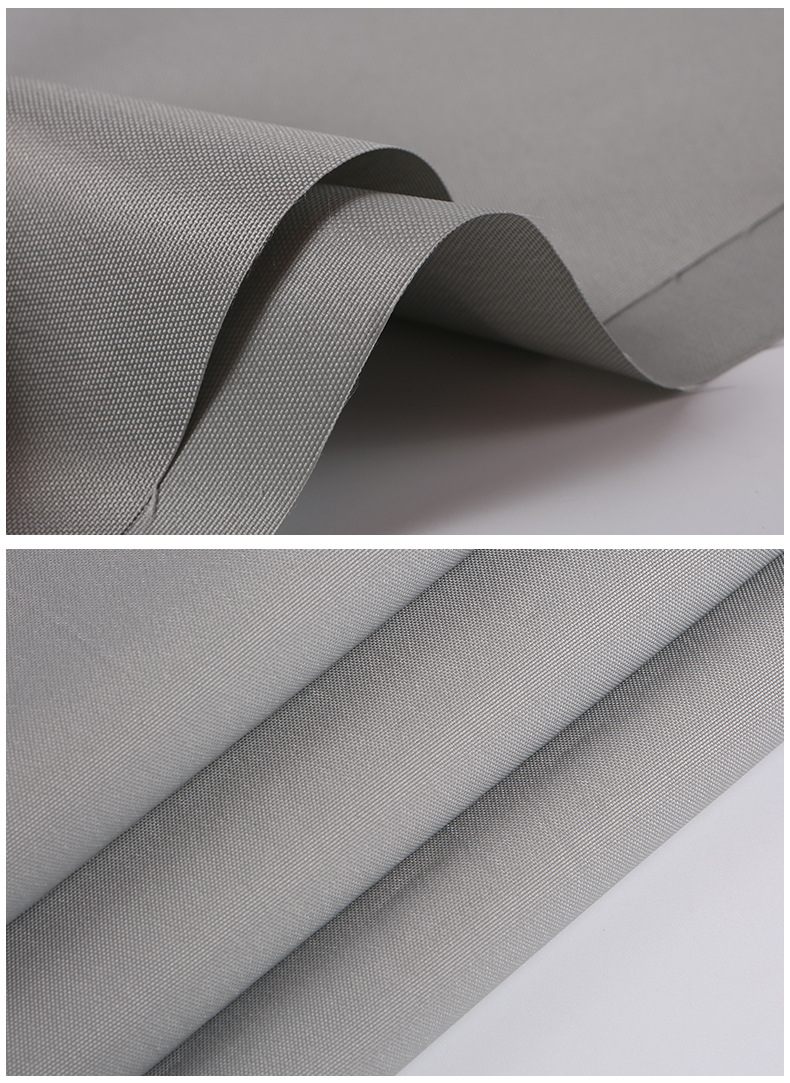
Reliable manufacturers usually do not simply recommend a certain material, but will help determine more suitable yarn specifications, fabric structures and finishing solutions based on the specific application scenarios of the customers.

Why Choosing the Right Manufacturer Matters

Impact on Product Quality

Manufacturers can be regarded as the foundation of product quality. Even if the terminal product is reasonably designed, if there are problems with the fabric in terms of water resistance, strength, color fastness or coating stability, the final product may still pose usage risks.

A reliable Oxford fabric manufacturer can carry out relatively stable process management in the raw material, weaving, dyeing, coating and inspection stages, thereby reducing the probability of problems such as batch differences, uneven coating, insufficient strength and obvious color differences.

On the contrary, if production management is unstable, fabric problems may not be obvious at first, but gradually surface after the customer has used it for a period of time, such as water seepage, fading, cracking, coating peeling or tearing and spreading. These problems often increase after-sales costs and affect brand reputation.

Long-Term Business Benefits

Choosing a manufacturer is not merely about fulfilling a single order; more importantly, it is about finding a supply partner that can cooperate with you for a long time. For outdoor products, industrial protection, tents and covers, a stable supply and continuous consistency of fabrics are of great significance.

A suitable manufacturer can help customers maintain the stability of mass production and provide support in product upgrades, specification adjustments, test coordination and delivery schedule arrangements. Especially when the order volume increases or the product enters a new market, the production capacity, response speed and quality management ability of the supplier will all become more crucial.

Core Factors to Evaluate a Manufacturer

Production Capacity and Scale

When evaluating manufacturers, production capacity is a fundamental factor. The purchaser needs to know whether the factory has the ability to stably undertake bulk orders and whether it has sufficient weaving, dyeing and finishing, coating and post-treatment capacity.

However, production capacity is not only determined by the factory area or the number of equipment, but also by the efficiency of production organization. A factory with relatively standardized management usually performs more stably in terms of production scheduling, delivery dates, quality control and abnormal handling.

For customers with long-term purchasing plans or project-based orders, whether the manufacturer can cooperate with delivery dates, whether it can maintain stable repeat purchases, and whether it can reduce batch fluctuations are all worth focusing on.

Oxford Fabric Manufacturer Production Capacity and Scale-HongdaTEX

Technology and Equipment

The final quality of Oxford fabric is directly related to the level of equipment. Weaving equipment affects the flatness, density, stability and microstructure of the fabric surface. Dyeing and finishing equipment affects color stability and hand feel. Coating equipment directly affects waterproofing, wear resistance, peel strength and surface effect.

Production equipment can be understood as "basic tools". Even if the raw materials are of good quality, it is difficult to maintain consistent product performance over the long term if the equipment precision is insufficient or the process control is unstable.

Therefore, when choosing a manufacturer, one can pay attention to whether it has relatively complete weaving, dyeing and finishing, coating, laminating or other post-treatment capabilities. The more complete such supporting capabilities are, the more conducive it is usually to controlling the delivery cycle and quality stability.

Oxford Fabric Manufacturer Technology and Equipment-HongdaTEX

Quality Control Systems

Reliable manufacturers do not merely inspect quality at the finished product stage but conduct process control at multiple links.

Common quality control processes include: raw material testing, yarn and weaving density inspection, dyeing batch control, coating thickness and uniformity inspection, width and weight detection, water resistance performance testing, tear strength testing, color fastness testing, and appearance inspection of finished products, etc.

For the purchaser, the clearer the quality control system is, the easier it is for cooperation risks to be identified and managed in advance. Especially for large orders, process control is more important than the performance of a single sample.

Certifications and Compliance Standards

International Certifications to Look For

Certification can serve as a reference for evaluating a manufacturer's management level and product safety. Common certifications include ISO 9001 Quality Management System, OEKO-TEX Standard 100 Textile safety-related certifications, etc.

It should be noted that certification does not mean that the product can meet the requirements in all scenarios, but it can indicate that the enterprise has a certain foundation in management processes, quality control or safety standards.

For the purchaser, certification materials can serve as a preliminary screening basis, but it is still recommended to make a comprehensive judgment by combining sample testing, factory capacity and actual delivery performance.

Environmental and Safety Compliance

As the global market's requirements for environmental protection and chemical safety increase, fabric compliance has become a key concern for many customers. For export orders, purchasers usually need to pay attention to REACH, RoHS, PFAS restrictions, GRS-related requirements or other environmental protection standards of the target market.

Manufacturers with strong compliance capabilities usually pay more attention to the source of raw materials, the use of additives, the management of the production process and the preparation of testing data. For brand customers or export customers, such capabilities help to reduce the risks of subsequent product launches and market access.

Material Customization Capabilities

Fabric Specifications and Denier Options

The requirements for Oxford fabric vary greatly among different products. Backpacks may commonly use 300D, 600D or 900D. Outdoor furniture covers may commonly use 600D or higher specifications. Industrial protective covers may require 900D, 1200D or even thicker fabrics.

Reliable manufacturers usually offer a variety of D options, gram weights, densities and door widths to choose from, and make suggestions based on the usage environment of the customer's products.

Customization is not merely about "thickening the fabric", but rather about finding the right balance among strength, weight, cost, hand feel and processing difficulty based on product requirements.

Coating and Finishing Customization

Coatings or composite methods such as PU, PVC and PE will directly affect the water resistance, softness, wear resistance, and applicable scenarios of Oxford fabric.

For instance, lightweight products might be more suitable for PU coatings with better softness; Outdoor covers and industrial protective products may be more suitable for PVC coatings with stronger protective properties. For some export products or those with high environmental protection requirements, fluorine-free waterproofing, recycled materials or specific environmental protection solutions may be needed.

In addition, customers can also add functions such as UV resistance, mold resistance, flame retardancy, cold resistance, stain resistance and wear resistance according to their needs. The more complete the manufacturer's process reserves are, the better it can support customers in developing differentiated products.

Reliable Oxford Fabric Manufacturer-HongdaTEX

When choosing a reliable Oxford fabric manufacturer, customers usually focus not only on a certain type of fabric but also on whether the entire supply chain can be stably coordinated. HongdaTEX has long been engaged in the production and development of outdoor functional fabrics. Its products cover Oxford fabric, outdoor canopy fabric, luggage fabric, tent fabric, sunshade fabric and related functional fabrics. It can provide fabric specification suggestions and customized cooperation according to different application scenarios.

Compared with single processing suppliers, HongdaTEX has a more complete production support capacity, covering multiple links such as yarn processing, weaving, dyeing and finishing, coating, and lamination. This supporting capability helps to better control color, hand feel, weight, width, coating effect and functional performance in product development and mass production.

For the purchaser, stability is often more important than a single sample. HongdaTEX attaches great importance to process management in bulk orders, implementing segmented control from raw materials, weaving, dyeing, coating and finished product inspection, helping customers reduce cooperation risks caused by batch differences, delivery time fluctuations or unstable performance.

During the product development stage, HongdaTEX can also assist in evaluating the appropriate D number, coating method, post-treatment function and environmental compliance direction based on the samples provided by the customer, target usage, testing requirements or budget range. Whether it is outdoor furniture covers, industrial equipment covers, bags, tents or other protective products, fabric solutions can be matched according to specific needs.

Conclusion

Choosing a reliable Oxford fabric manufacturer is about more than just comparing prices. It’s about understanding production capabilities, quality systems, customization options, and real-world experience. The right partner can help you create products that perform consistently and meet user expectations.

If you are looking for a reliable Oxford fabric manufacturer or developing suitable fabrics for outdoor covers, bags, tents, or industrial protective products, please feel free to contact HongdaTEX for further communication.