How to Choose a 210D Yarn-Dyed Oxford Fabric Manufacturer for Bags and Luggage
When sourcing 210D yarn-dyed Oxford fabric for bags and luggage, buyers should verify whether the fabric meets the target product's weight, construction, and appearance requirements. The 210D designation describes yarn linear density, while yarn-dyed refers to color formation through weaving with pre-colored yarns. Neither establishes abrasion resistance, tear strength, or colorfastness. Buyers should confirm yarn specifications, weave density, color arrangement, finished GSM, usable width, and finishing requirements before evaluating suppliers.
1. Which Bag Applications Can Use 210D Yarn-Dyed Oxford Fabric?
210D yarn-dyed Oxford fabric may be considered for certain lightweight bags and soft components. However, the denier designation alone does not establish the fabric's finished weight or load-bearing capability.
Material selection should reflect the actual product and the intended fabric component.
|
Bag application |
Main sourcing priorities |
What to verify |
|---|---|---|
|
Lightweight backpacks |
Weight, flexibility, appearance |
Finished GSM, abrasion resistance, sewing compatibility |
|
Foldable storage bags |
Foldability, fabric weight |
Finished thickness, folding behavior, tear resistance |
|
Travel organizers |
Color, dimensions, lightweight construction |
Usable width, colorfastness, sewing performance |
|
School bag interior dividers |
Handle, appearance, processing |
Thickness, GSM, cutting and sewing |
|
Tool bags and load-bearing sections |
Friction, loads, localized stress |
Abrasion resistance, tear strength, finished-product strength |
For lightweight backpacks, buyers may evaluate 210D yarn-dyed polyester Oxford fabric against the actual design requirements.
For projects involving heavier loads, prolonged friction, or concentrated stress, the specified construction must be validated rather than assumed suitable based on 210D.
The 210D designation also does not determine a fixed finished GSM. Yarn construction, weave density, and finishing can all influence fabric weight and handle.
2. What Specifications Should Buyers Confirm for 210D Yarn-Dyed Oxford Fabric?
The “D” in 210D refers to denier, a unit of yarn linear density. Yarn-dyed describes the process of weaving with yarns that have already been colored.
A complete purchasing specification should define the material construction, color arrangement, and finished condition.
|
Specification |
What buyers should confirm |
Purpose |
|---|---|---|
|
Fiber composition |
Polyester or another specified fiber |
Establish actual material composition |
|
Warp and weft yarn |
Denier and yarn construction in each direction |
Identify the yarn configuration |
|
Fabric density |
Ends and picks per specified unit |
Establish the woven construction |
|
Weave |
Plain, twill, or another specified weave |
Define the fabric structure |
|
Yarn-dyed colors |
Warp and weft colors and arrangement |
Establish the intended appearance |
|
Pattern repeat |
Stripe width, check dimensions, or other repeats |
Control pattern arrangement |
|
Finished fabric weight |
GSM (g/m²) and tolerance |
Evaluate product weight |
|
Usable width |
Width available for cutting |
Assess material utilization |
|
Finishing |
PU, PVC, or other required processing |
Define the finished fabric condition |
|
Performance |
Abrasion resistance, tear resistance, colorfastness |
Establish acceptance criteria |
For example, a request for “210D polyester yarn-dyed Oxford fabric” still requires clarification of the warp and weft yarns, density, weave, color arrangement, and finishing.
If the warp and weft use different yarn specifications, each must be recorded separately. One 210D label should not be used as a substitute for the complete fabric construction.
3. How Does 210D Yarn-Dyed Oxford Fabric Differ From Piece-Dyed Oxford Fabric?
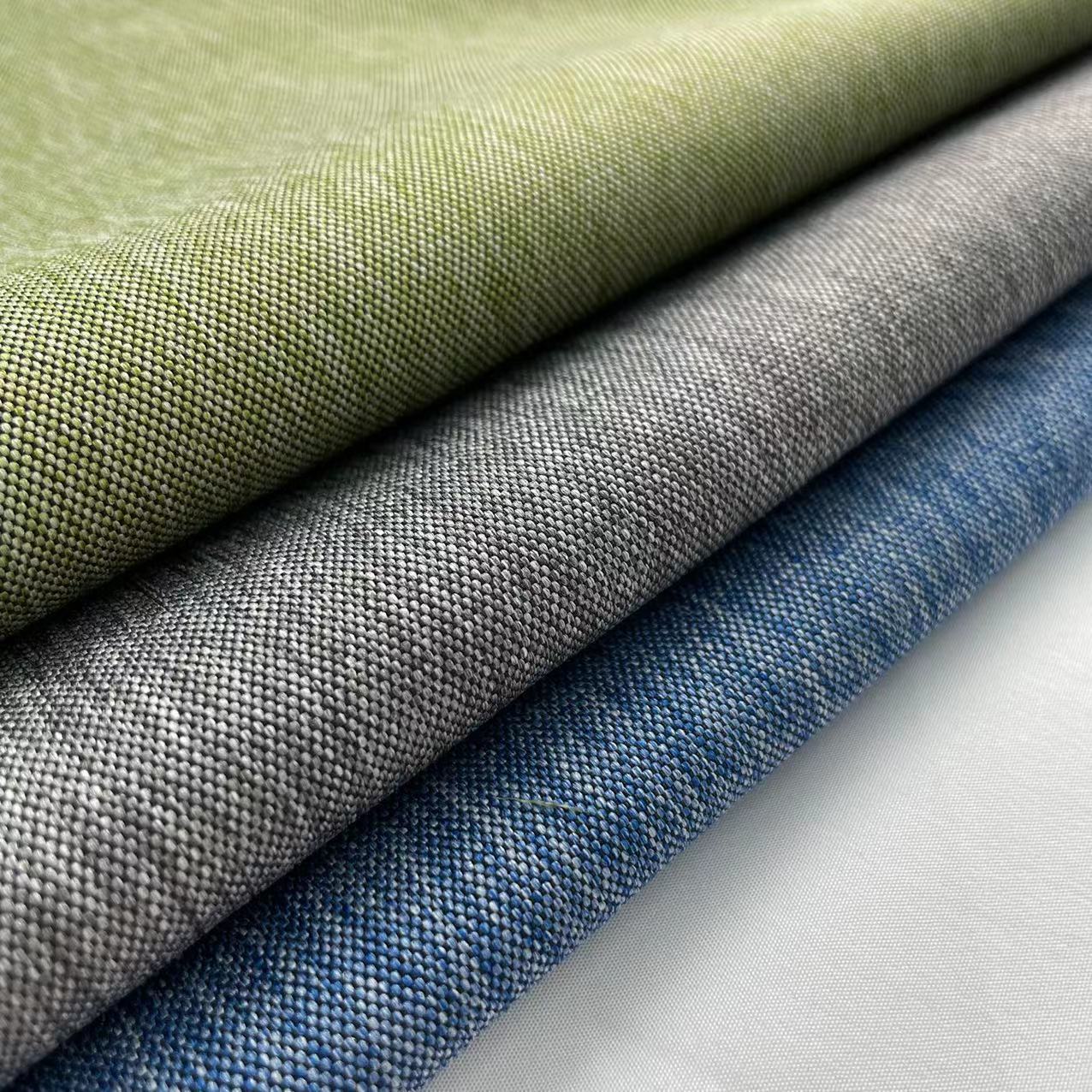
Yarn-dyed Oxford fabric is generally woven using yarns that have already been colored. Warp and weft combinations, yarn arrangement, and weave can create two-tone effects, stripes, checks, or other woven appearances.
Piece-dyed Oxford fabric is generally woven before the fabric is dyed. The two approaches create different sourcing and inspection requirements.
Yarn-dyed Oxford fabric
For bags requiring contrasting warp and weft colors, woven stripes, checks, or other yarn-based patterns, a yarn-dyed construction can be evaluated.
Buyers should specify yarn colors, their sequence, weave construction, and pattern repeat.
Piece-dyed Oxford fabric
For bags requiring a particular solid color, piece-dyed construction may be evaluated against the design requirements.
Buyers should establish an approved color sample, finished appearance, fabric construction, and relevant colorfastness criteria.
Yarn-dyed does not automatically mean abrasion-resistant or fade-resistant. Actual performance depends on yarn properties, fabric construction, coloration, finishing, and test conditions.
If a bag design relies on a specific two-tone woven effect, ordinary piece-dyed fabric may not reproduce it directly. Conversely, a solid-color design does not automatically require yarn-dyed construction.