Fabric Applications in Outdoor Covers
Introduction to Outdoor Cover Fabrics
Why Outdoor Covers Matter Today
Pay attention to the outdoor Spaces around you, whether it's a garden, a terrace, a construction site, or a logistics yard. You will find a common point: many items need certain protection. Nowadays, outdoor cover products are no longer just additional accessories. Instead, they play a relatively important role in extending the product's service life, reducing maintenance costs, and protecting items from complex environmental influences.
Outdoor cover products can be understood as an "external protection" layer for daily items. Whether it is a sofa that has been exposed to the sun for a long time, a motorcycle exposed to rain, or industrial equipment stored in an open area at night, cover products usually play a crucial protective role. Without such protection, materials tend to age more easily, their color is more likely to change, and their structural state may also be affected by the external environment more quickly.
This increase in demand is gradually reflected in consumers' purchasing tendencies. Surveys show that about 35% of purchasers, when choosing outdoor products, will pay particular attention to whether the fabric has a certain degree of water resistance, durability and is convenient for later maintenance.[1] This also indicates that many users nowadays are no longer merely concerned about "whether there is a cover or not", but rather whether such products can provide more long-term and stable protective value.
Growth of Outdoor Fabric Demand
The demand for outdoor cover fabrics has been on the rise in recent years, and the reasons for this are quite obvious. As more and more people start to pay attention to outdoor lifestyles such as gardening, camping and outdoor dining, the market demand for fabrics with certain protective capabilities has also risen accordingly.
From the perspective of industry development trends, weather-resistant and waterproof outdoor fabrics are receiving increasing attention. Globally, the outdoor fabric market is expected to exceed 20 billion US dollars by 2035.[2] Meanwhile, in functional application scenarios, over 58% of consumers prefer waterproof or waterproof fabrics in functional applications.[3]
This growth is not only reflected in the scale of demand but also in the improvement of requirements for product quality. Nowadays, users often hope that fabrics can maintain relatively stable performance under environmental conditions such as rain, ultraviolet rays, friction and temperature differences. For this very reason, an increasing number of fabric manufacturing enterprises are continuously developing their products and optimizing their processes to meet the actual demands for functional fabrics in various outdoor application scenarios.
Key Requirements for Outdoor Cover Fabrics
Waterproof Performance
First, take a look at a relatively basic and highly concerned requirement for outdoor cover fabrics - water resistance. For cover products, if they cannot effectively block moisture, their protective effect will be greatly affected. Nowadays, many outdoor fabrics enhance their waterproof performance through structural design and post-treatment processes. Some products can achieve a relatively high water pressure resistance level, thus being suitable for use in environments with heavy rainfall or high protection requirements.
However, waterproof performance is not merely about "being able to block water", but more importantly, it is about stability during long-term use. That is to say, an outdoor cover fabric not only needs to have a certain waterproof ability in the initial stage, but also needs to maintain a relatively stable protective performance after multiple exposures to rain, moisture and other environments. It is precisely for this reason that coating processes such as PU and PVC are commonly used in outdoor fabrics. They can form a protective layer on the fabric surface, thereby helping to reduce water penetration.
Durability and Strength
In actual use, outdoor cover products are often constantly subjected to various external forces, such as wind pulling, external object compression, and repeated friction with the surface. This requires the fabric itself to have a certain degree of strength and durability to adapt to more complex usage environments and reduce the occurrence of damage or excessive wear.
Generally speaking, durability is comprehensively evaluated by combining tear resistance and wear resistance. Both of these indicators are quite important for the long-term use of outdoor cover products. For instance, when providing protective cover for equipment with corner structures, if the fabric strength is insufficient, damage may occur relatively quickly. Outdoor fabrics with better durability usually can maintain a relatively stable usage state even after multiple contacts and frictions.
The combination of water resistance and durability usually constitutes a core performance foundation for outdoor cover fabrics and is also one of the key focuses for many purchasers when choosing materials.
Types of Fabrics Used in Outdoor Covers
Oxford Fabric
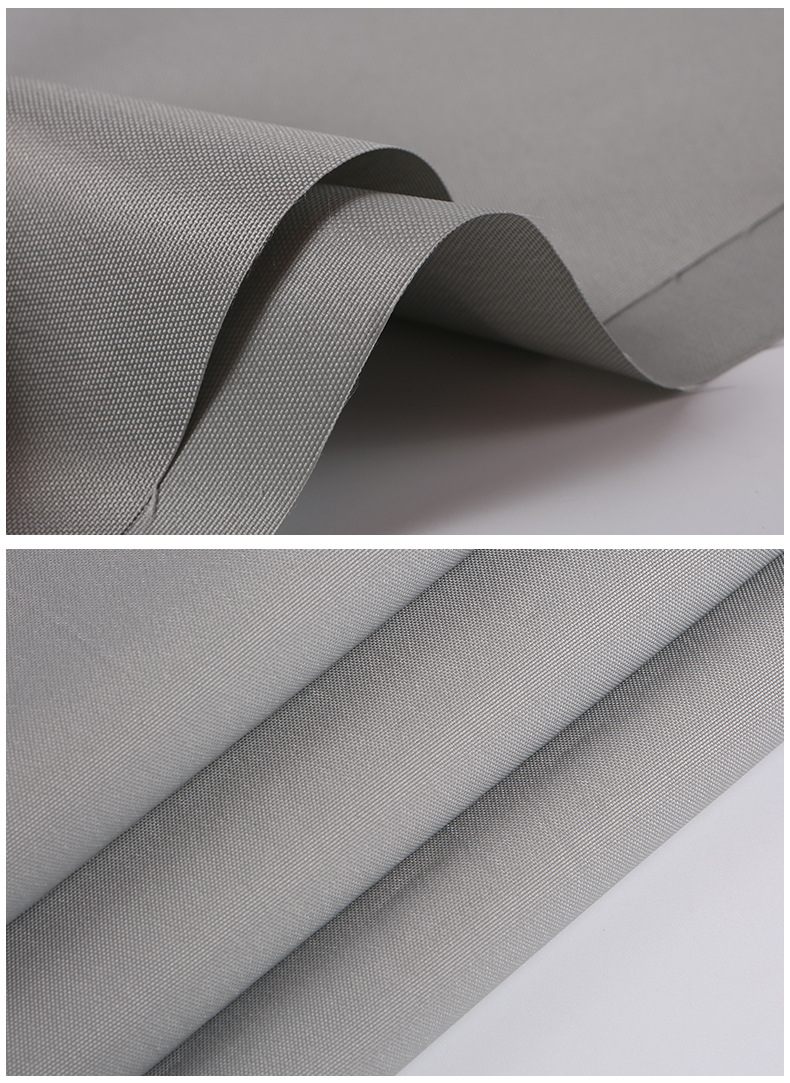
Among the commonly used fabrics for outdoor cover products, Oxford fabric is a type that is widely applied. Its own basket pattern weaving structure can provide a certain strength foundation for the fabric, and at the same time, it is convenient to combine different coating processes for functional extension. Therefore, it is relatively common in outdoor protective products.
Oxford fabric is commonly used in:
- Furniture covers
- Tent covers
- Equipment protection
- Industrial tarpaulins
Oxford fabric has attracted much attention from many manufacturing enterprises mainly because it usually achieves a relatively balanced performance among strength, flexibility and cost control, and thus is suitable for a variety of different types of outdoor cover products.
Polyester Fabric
Polyester fabric is also a relatively common choice for outdoor cover products, especially suitable for cover products that have certain requirements for lightweighting. This type of fabric usually has a certain moisture-proof ability and UV resistance, while the overall weight is relatively light.
One notable feature of polyester fabric is that it usually dries quickly after getting damp, which helps reduce water retention and, to some extent, lowers the risk of mold growth in a humid environment. Therefore, it is more suitable for cover products with high humidity or those that need to be frequently exposed to outdoor environments.
Coating Technologies in Outdoor Covers
PU Coating Applications
PU (polyurethane) coating is widely used in outdoor fabrics, mainly because it can provide a relatively flexible and lightweight waterproof protective layer for the fabric. While enhancing the waterproof performance, it usually does not have a significant impact on the original softness and ease of use of the fabric.
This makes PU-coated fabrics suitable for:
- Outdoor furniture covers
- Lightweight equipment protection
- Consumer outdoor products
PVC Coating Applications
In contrast, PVC coatings are more commonly used in scenarios where higher requirements are placed on protection and durability. It usually forms a thicker protective layer on the fabric surface, thereby providing stronger support in terms of water resistance and durability.
PVC-coated fabrics are often used in:
- Industrial covers
- Truck tarpaulins
- Construction site protective products
Of course, there are certain trade-offs for this type of coating. PVC coating usually makes the fabric as a whole heavier and relatively less flexible. However, in application scenarios with high requirements for strength and protective performance, such performance enhancements usually have practical significance.
Applications Across Industries
Furniture Covers
Outdoor furniture is constantly exposed to sunlight, rain and dust, and thus has higher requirements for protective fabrics. Cover products made of functional fabrics can provide certain protection for furniture and help it maintain a good functional state and appearance during long-term use.
Vehicle and Equipment Covers
From automobiles to construction machinery, outdoor cover products play a relatively practical role in reducing the impact of environmental factors on equipment. This type of cover fabric usually needs to take into account certain strength, water resistance and wear resistance to adapt to more complex outdoor usage environments.
Performance Features That Matter
UV Resistance
Ultraviolet rays in sunlight are one of the important factors affecting the service life of outdoor fabrics. If the corresponding weather-resistant design is lacking, the fabric may experience fading, reduced strength and performance degradation after long-term exposure to the sun.
Nowadays, many outdoor fabrics enhance their UV resistance through raw material selection or post-treatment processes, thereby helping the fabric maintain a relatively stable color and physical properties even after prolonged exposure to sunlight.
Abrasion Resistance
During the use of outdoor cover products, friction often occurs with rough surfaces, corner structures or equipment casings. Therefore, wear resistance is also a relatively important performance index. Better wear resistance helps the fabric maintain a relatively stable state under repeated friction and reduces surface damage.
Challenges in Outdoor Cover Applications
Weather Exposure Issues
Outdoor cover products usually have to deal with various environmental changes, such as rain, high temperature, wind force, and even low temperature or snowfall. All these factors may have an impact on the performance of the fabric in use, so outdoor protective fabrics often need to have relatively comprehensive weather resistance.
Material Degradation Problems
As the usage time increases, ultraviolet radiation, a humid environment and temperature differences may all cause the fabric to gradually age. Therefore, choosing the appropriate base fabric material and matching coating process is usually quite crucial for outdoor cover products.
How Advanced Fabrics Solve These Issues
Coating Innovation
With the continuous development of coating technology, nowadays, more than 41% of manufacturers are integrating advanced coatings[4], and outdoor fabrics have been further enhanced in terms of water resistance, durability and service life. Through a more reasonable coating structure design, the fabric can better adapt to the protective requirements in complex environments.
Material Engineering
The development of modern outdoor fabrics usually takes into account multiple dimensions such as strength, flexibility and weather resistance comprehensively. Through the collaborative optimization of materials and processes, fabrics can maintain relatively stable performance in various application scenarios.
HongdaTEX Fabric Solutions
Product Advantages
HongdaTEX mainly focuses on the development and production of functional Oxford fabric for outdoor cover applications, and its product designs are more in line with actual usage scenarios. Its fabric can be provided in the following performance directions according to different requirements:
- Waterproof performance up to 10,000 mm
- Tear strength above 60N
- Strong UV resistance
- High abrasion resistance
These performance characteristics help outdoor cover products maintain relatively stable durability and appearance during long-term use.
Manufacturing Strength
HongdaTEX has over 30 years of industry experience and is equipped with more than 100,000 square meters of production space, with a daily output capacity of approximately 1 million meters. The company can provide a relatively stable supply capacity and support OEM/ODM customization services, including multiple customization contents such as coating types, denier specifications, and colors.
Meanwhile, the company conducts production and management in accordance with relevant ISO standards, and is capable of providing relatively stable fabric solutions for customers at home and abroad.
Conclusion
Outdoor cover products may seem to have a simple structure, but the fabric selection and process design behind them are not simple. From waterproof performance to durability and UV resistance, each performance aspect is directly related to the actual protective effect of the product. With the continuous increase in market demand, functional fabrics like denim are also playing an increasingly important role in the field of outdoor protection.
If you are looking for a reliable manufacturer of outdoor fabric for covers, don't hesitate to contact us and get tailored solutions for cover fabric.
[1]Outdoor Fabric Market Size & Share Analysis - Growth Trends And Forecast (2025 - 2032)