300D Oxford Fabric Manufacturers: How to Evaluate Suppliers, Specifications and Quality Requirements
1. What Is 300D Oxford Fabric?
The term 300D refers to the linear density of yarn, expressed in denier. Denier is defined as the mass in grams of 9,000 meters of yarn.
However, 300D does not independently determine the finished fabric's weight, thickness, abrasion resistance, tear strength or water resistance.
Two fabrics described as 300D Oxford fabric may differ in yarn construction, weaving density, weave pattern and finishing methods.
Buyers should confirm the following specifications before requesting quotations.
|
Specification |
Information to Confirm |
|---|---|
|
Fiber composition |
Polyester or another specified fiber |
|
Warp and weft |
Whether 300D applies to the warp, weft or both |
|
Fabric density |
Ends and picks per specified measurement unit |
|
Weave construction |
Plain weave, twill or another specified structure |
|
Fabric weight |
Base or finished fabric weight in g/m² |
|
Usable width |
Actual width available for cutting |
|
Finishing |
Dyeing, printing, heat setting, PU or PVC coating |
|
Performance |
Water resistance, abrasion resistance, tear strength and other required properties |
A quotation described only as "300D Oxford fabric" does not establish a complete product specification.
2. What Applications Should Be Considered When Selecting 300D Oxford Fabric?
The suitability of 300D Oxford fabric depends on the intended product, construction and operating conditions.
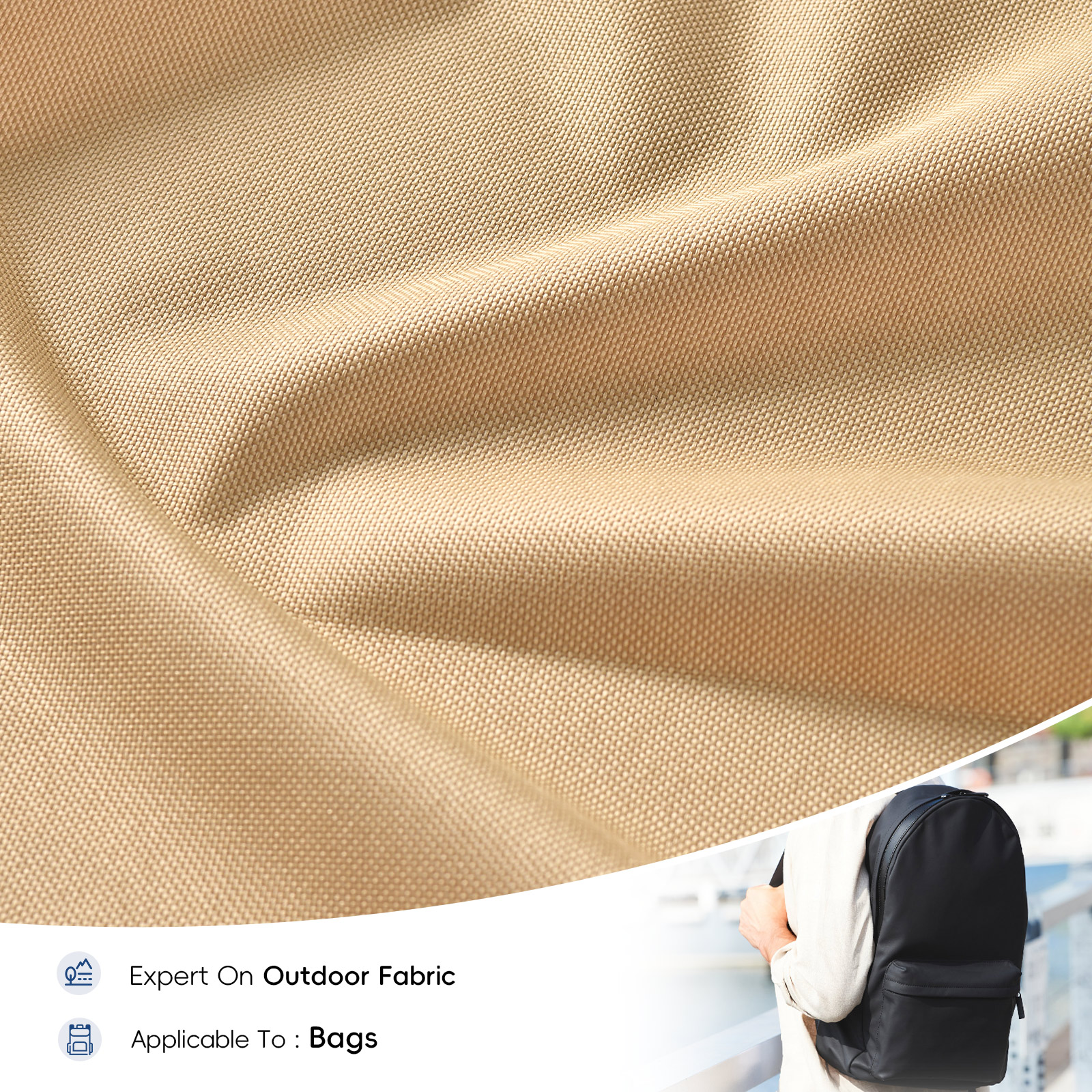
Bags, Backpacks and Storage Products
For bags and backpacks, buyers should evaluate fabric weight, abrasion resistance, tear strength, flexibility and sewing compatibility.
Different sections of a bag may face different conditions. The main body, bottom panels, side pockets and reinforced areas may require separate material assessments.
A 300D fabric should not be approved for a specific bag design solely because of its denier.
Outdoor Furniture and BBQ Covers
For outdoor covers, procurement requirements may include water resistance, colorfastness, tear strength, coating condition and flexibility during folding.
Where water resistance is specified, the testing method and acceptance criteria should be documented.
Outdoor suitability also depends on the expected exposure conditions. The 300D designation does not establish weathering performance.
Tents and Outdoor Shelters
For tent applications, buyers should consider water resistance, tensile and tear properties, fabric construction and processing requirements.
Different tent components may require different material structures.
If a project includes flame-retardancy requirements or chemical restrictions, these must be evaluated separately against the relevant product and testing conditions.
Umbrellas and Other Outdoor Products
For umbrella applications, fabric weight, appearance, colorfastness, tear strength, tension and environmental exposure may affect material selection.
A fabric suitable for an outdoor cover is not automatically suitable for an umbrella, even when both products use a 300D yarn specification.
3. PU vs. PVC Coating: What Should Buyers Consider?
PU and PVC are different coating material systems. Their suitability depends on the intended fabric construction, finished weight, flexibility, appearance and required performance.
|
Evaluation Factor |
PU Coating |
PVC Coating |
|---|---|---|
|
Material system |
Polyurethane-based coating |
Polyvinyl chloride-based coating |
|
Main purchasing considerations |
Finished hand feel, weight, coating condition and performance |
Finished construction, weight, stiffness and performance |
|
Water resistance |
Requires specified testing and acceptance criteria |
Requires specified testing and acceptance criteria |
|
Processing |
Evaluate cutting, sewing and folding |
Evaluate cutting, sewing and folding |
|
Quotation comparison |
Match base fabric and finished specifications |
Match base fabric and finished specifications |
Neither coating should be treated as an automatic indicator of superior performance.
Even when the same 300D polyester base fabric is used, differences in coating construction and processing can affect the finished fabric's weight, flexibility and surface properties.
For projects that do not require a coating, uncoated fabric should also be evaluated according to the actual application.
4. How Should Water Resistance, Abrasion Resistance and Tear Strength Be Verified?
Performance requirements should be translated into measurable acceptance criteria.
Water resistance: Where hydrostatic pressure is specified, buyers should identify the testing method, target value, specimen condition and acceptance rules. Water repellency and resistance to water penetration are separate properties.
Abrasion resistance: Buyers should define the test method, abrasive material, load, test conditions and evaluation criteria. Yarn denier alone cannot determine abrasion performance.
Tear strength: The testing method, direction of measurement and acceptance requirements should reflect the intended product.
Colorfastness: Depending on the application, relevant tests may include resistance to rubbing or light exposure.
Testing results must be linked to the actual fabric construction and finishing condition.
A report for one sample or batch should not be interpreted as proof that every other specification or future production batch will achieve the same results.
5. How Should Buyers Evaluate 300D Oxford Fabric Manufacturers?
A supplier evaluation should include four areas.
Product compatibility. Confirm whether the manufacturer works with the specified fiber, fabric construction, finishing processes and intended applications.