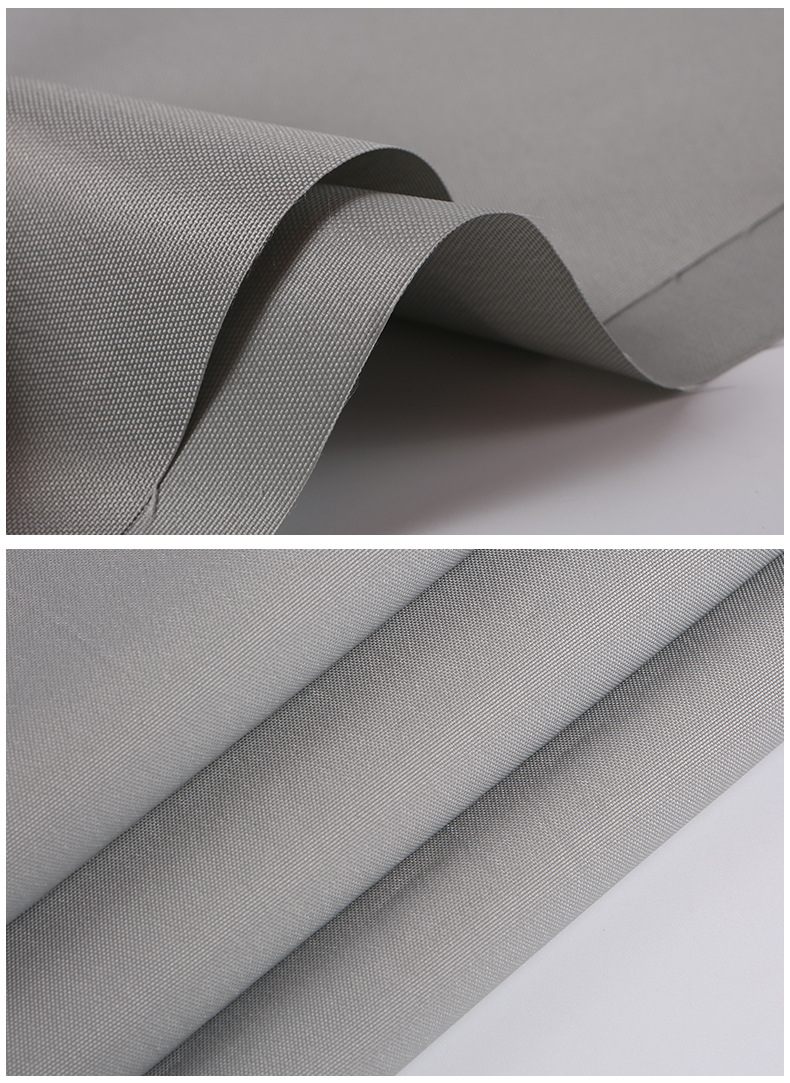
300D Oxford Fabric Material
What Is 300D Oxford Fabric
Understanding Oxford Weave Structure
When many people first hear the term "Oxford fabric", they might think it is just one of the ordinary woven fabrics. But in fact, the wide application of Oxford fabric is closely related to its unique weaving structure.
Oxford fabric is usually woven using the basket weave method, that is, multiple strands of yarn are interwoven, rather than the common plain weave structure of one top and one bottom. Such a structure will give the fabric surface a certain texture, while also providing greater overall support and durability. It is named Oxford fabric because it was later adopted by the University of Oxford as the fabric for school uniforms.
It can be understood as a "multi-strand rope type" force-bearing structure. Each interweaving point can disperse the external force to a certain extent, so the fabric will be subjected to force more evenly. This is also why Oxford fabric is often used in luggage, outdoor products and protective covers, as these products usually have to deal with daily friction and repeated use.
What Does “300D” Mean in Fabric
In 300D, the "D" stands for Denier, which is a unit used to indicate the thickness of yarn. Generally speaking, the higher the Denier value, the coarser the yarn, and the fabric is usually thicker and stronger.
The 300D is in a relatively middle position. It is neither particularly thin and light nor overly thick and heavy. It can be understood that the 150D is thinner and lighter, the 600D is thicker and thicker, and the 300D lies between the two, offering a certain level of support while maintaining good flexibility and lightweight performance.
It is precisely because of this balance that 300D Oxford fabric has a relatively high application frequency in multiple industries.
Key Characteristics of 300D Oxford Fabric
Strength and Durability
Many people are concerned: As a medium-weight fabric, can 300D Oxford fabric meet the daily usage requirements? Generally speaking, it is possible.
300D Oxford fabric usually has good tear resistance and wear resistance, and is suitable for withstanding medium-intensity usage environments. Although it is not designed for extreme industrial loads, it usually maintains relatively stable performance for daily applications such as backpacks and covers.
In addition, the basket pattern structure of Oxford fabric also helps to reduce the risk of further expansion of small area damage, thereby extending the service life of the finished product to a certain extent.
Lightweight Performance
One obvious advantage of 300D Oxford fabric is that it combines a certain level of strength with a relatively light weight. Compared with heavier fabrics like 600D and 900D, 300D is easier to keep light and thus more flexible when carried and used. This is particularly important for products such as travel bags and lightweight outdoor equipment, as the weight of the products directly affects the user experience. It can be understood as the difference between a light coat and a heavy cotton-padded jacket: both can offer some protection, but the former usually has more advantages in terms of comfort and flexibility.
Water Resistance and Coating Compatibility
From the perspective of the base fabric itself, Oxford fabric, due to its relatively tight weaving, already has a certain moisture-proof ability. After adding coatings such as PU, PA, and PVC, it can be further transformed into a more functional fabric.
Depending on different coating processes, the water pressure resistance of 300D Oxford fabric can typically reach around 1000mm to 5000mm, or even higher, thus meeting the application requirements of various outdoor scenarios.
This compatibility also enables manufacturers to adjust the fabric performance in different directions through post-treatment processes without changing the base fabric material.
Manufacturing Process of 300D Oxford Fabric
Yarn Selection and Weaving
The production of 300D Oxford fabric usually starts with the yarn. Manufacturers usually choose polyester or nylon fibers based on the application and control the strength and uniformity of the yarn. Subsequently, these yarns were woven into a representative Oxford fabric structure through the basket weave method.
This step is extremely crucial because the quality of the yarn and the weaving precision will directly affect the performance of the fabric in subsequent practical use.
Dyeing and Finishing
After weaving is completed, the fabric usually enters the dyeing process to achieve the target color. Modern dyeing and finishing techniques help improve color consistency and, to some extent, enhance the resistance to fading, which is particularly important for outdoor products.
During the post-treatment stage, soft finishing, anti-wrinkle treatment or surface effect optimization and other processes can also be added as needed to improve the hand feel and appearance of the fabric.
Coating and Functional Treatments
This stage usually determines the functional direction of the fabric. After being treated with coatings such as PU, PA and PVC, 300D Oxford fabric can achieve better water resistance, durability and environmental adaptability.
The following are the characteristics of the common coatings:
- PU coating: Flexible and commonly used for daily applications
- PA coating: Relatively light, balancing basic functions and cost control
- PVC coating: Thicker and more suitable for application scenarios with higher protection requirements
Types of 300D Oxford Fabric
Polyester 300D Oxford Fabric
Polyester is a relatively common raw material in 300D Oxford fabric. It usually strikes a good balance among durability, cost control and UV resistance, and thus is more suitable for mass-market and mass-produced products.
Coated 300D Oxford Fabric (PU, PA, PVC)
After coating treatment, 300D Oxford fabric can be further enhanced in terms of water resistance, stain resistance and wear resistance. By combining different coatings, manufacturers can customize the performance of fabrics according to specific needs.
Performance Comparison with Other Denier Fabrics
300D vs 150D
| Feature | 150D | 300D |
|---|---|---|
| Weight | Very Light | Light |
| Strength | Moderate | Higher |
| Durability | Lower | Better |
| Application | Linings, light bags | Backpacks, covers |
300D vs 600D
| Feature | 300D | 600D |
|---|---|---|
| Weight | Light | Medium |
| Strength | Good | Very High |
| Durability | Higher | Lower |
| Application | Portable gear | Heavy-duty products |
Main Applications of 300D Oxford Fabric
Bags and Backpacks
In bags and backpacks applications, 300D Oxford fabric has a relatively high usage frequency. It usually strikes a good balance between lightweight and durability, and thus is suitable for a variety of products such as school bags, travel backpacks, and tote bags.
Outdoor Covers
From furniture covers to equipment protective covers, 300D Oxford fabric can provide basic weather resistance without imposing excessive weight burdens, making it particularly suitable for products that need to be moved or stored frequently.
Tents and Camping Gear
For lightweight camping gear, 300D Oxford fabric is a relatively common choice. It can not only help the product maintain a certain sense of structure, but also take portability into account.
Folding Chairs and Light Furniture
Folding chairs usually also use 300D Oxford fabric because it not only has a certain support strength but is also easy to fold, carry and transport.
Advantages of 300D Oxford Fabric
Cost-Performance Balance
One of the key reasons why many manufacturers choose 300D Oxford fabric is that it usually offers relatively stable performance at a relatively reasonable cost, making it easier to adapt to the development of mass-market products.
Versatility Across Industries
From bags to outdoor furniture and various lightweight protective products, 300D Oxford fabric can achieve functional extension through different coatings and post-treatment methods, thus having a good adaptability in multiple industries.
Limitations to Consider
Not Suitable for High-intensity and Heavy-load Scenarios
Although 300D Oxford fabric has good daily durability, it is not the most suitable choice for extremely heavy-load or high-intensity industrial applications. In such scenarios, fabrics of 600D, 900D or even higher specifications are usually more suitable.
Breathability Considerations
If the fabric has undergone a relatively thick coating treatment, its breathability is usually affected to some extent. Therefore, when designing products that require air circulation, this point needs to be considered in advance.
How to Choose the Right 300D Oxford Fabric
Selecting According to Coating Types
The requirements for coatings vary in different product environments. If flexibility is given more importance, PU is usually a more common choice. If durability and protection are given more importance, PVC might be more suitable.
Selecting According to Actual Application
Always align fabric properties with real-world usage. Lightweight products benefit from 300D, but heavy-duty items may require stronger materials.
HongdaTEX 300D Oxford Fabric Solutions
Product Advantages
HongdaTEX offers 300D Oxford fabric developed for practical application scenarios, covering the following performance directions:
- Water pressure up to 10,000mm
- Tear strength above 60N
- Strong UV resistance
- Excellent wear resistance
These features help the product maintain a relatively stable performance in different environments.
Manufacturing Strength
HongdaTEX has over 30 years of industry experience and is equipped with a production space of more than 100,000 square meters, with a daily output capacity of approximately 1 million meters. The company has passed relevant system certifications such as ISO 9001, ISO 14001 and OEKO-TEX®, and supports OEM/ODM customization services. It can provide diversified fabric solutions for global customers.
Future Trends of 300D Oxford Fabric
As the market increasingly emphasizes sustainable development, environmentally friendly coatings, recycled polyester and fluorine-free waterproofing processes are gradually becoming important development directions for 300D Oxford fabric.
Meanwhile, the market demand for "lightweight yet still durable" fabrics is also continuously increasing, which makes 300D Oxford fabric still maintain a high application value in modern manufacturing systems.
Conclusion
300D Oxford fabric is a functional fabric that combines lightness, daily durability and multi-scenario adaptability. It is suitable not only for products with portability requirements, but also can meet the structural and protection needs in most conventional usage scenarios.
Whether for backpacks, outdoor covers, or light furniture and camping supplies, 300D Oxford fabric usually offers a relatively balanced choice in terms of weight, performance and cost.
Looking for reliable 300D Oxford fabric solutions? Contact HongdaTEX today for customized materials tailored to your product needs.