How to Source 300D Yarn-Dyed Oxford Fabric for Bags and Luggage
A workable specification should combine the end product, fabric construction, yarn colors, weave, finished weight, width, finishing requirements and acceptance criteria.
What do “300D” and “yarn-dyed” mean in bag fabric specifications?
The “D” in 300D generally refers to denier, which describes yarn linear density.
It is useful for identifying yarn size, but it does not by itself determine fabric weight, thickness or mechanical performance.
Two 300D Oxford fabrics may differ in:
- warp and weft density;
- yarn construction;
- weave;
- finished weight;
- usable width;
- finishing;
- abrasion performance;
- tear performance.
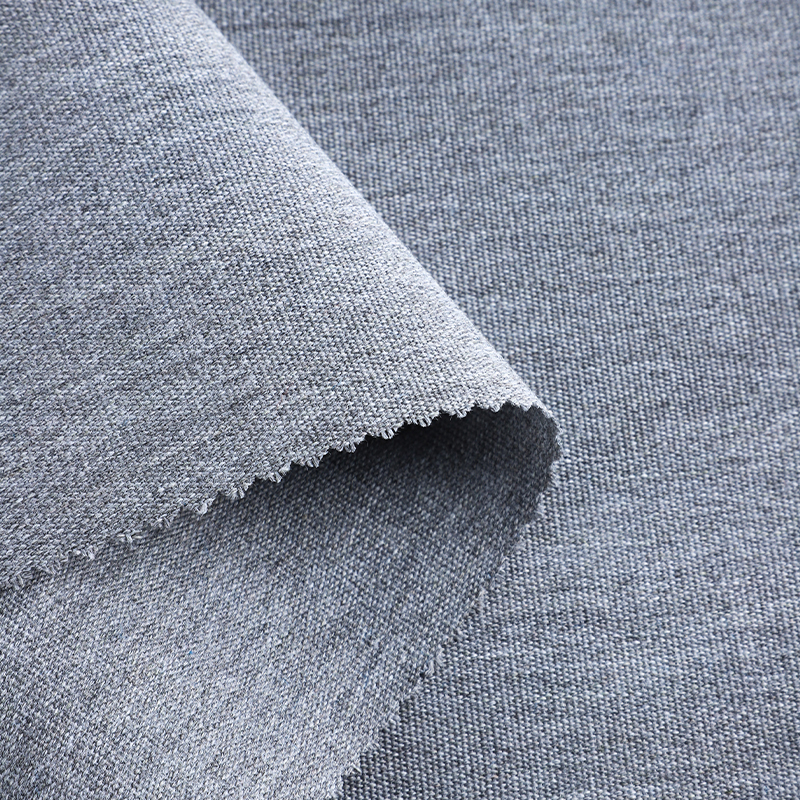
Yarn-dyed construction concerns the use and arrangement of colored yarns during weaving.
Depending on the warp and weft colors, arrangement and weave, a 300D yarn-dyed fabric may show a two-tone, stripe, check or mixed-color appearance.
For this reason, “300D yarn-dyed Oxford” is still not a complete purchasing specification.
Why should the bag or luggage component be defined?
“Bags and luggage” covers products with different structures, including backpacks, school bags, soft luggage, tool bags and other sewn products.
The same product may also use different fabric structures in different areas.
Main body
The main body may need to balance appearance, fabric weight, flexibility, abrasion requirements and sewing performance.
Bottom panel
The bottom may experience more contact with floors, tables or other surfaces.
Where repeated abrasion is expected, abrasion and tear requirements should be defined separately rather than inferred from the 300D yarn specification.
Corners and seam areas
These areas may experience concentrated loads.
A fabric may remain visually intact on its surface while a seam or corner is subjected to tearing forces. Abrasion resistance and tear strength should therefore be treated as different properties.
What should be specified for 300D yarn-dyed Oxford fabric?
A sourcing specification can include:
| Item | Information to Confirm |
|---|---|
| Material | Polyester Oxford fabric or specified alternative |
| Yarn | 300D and detailed warp/weft configuration |
| Yarn-dyed structure | Warp color, weft color and arrangement |
| Density | Warp and weft density |
| Weave | Plain, twill, check or another structure |
| Weight | Finished fabric weight |
| Width | Usable width |
| Finishing | Coating or other finishing when required |
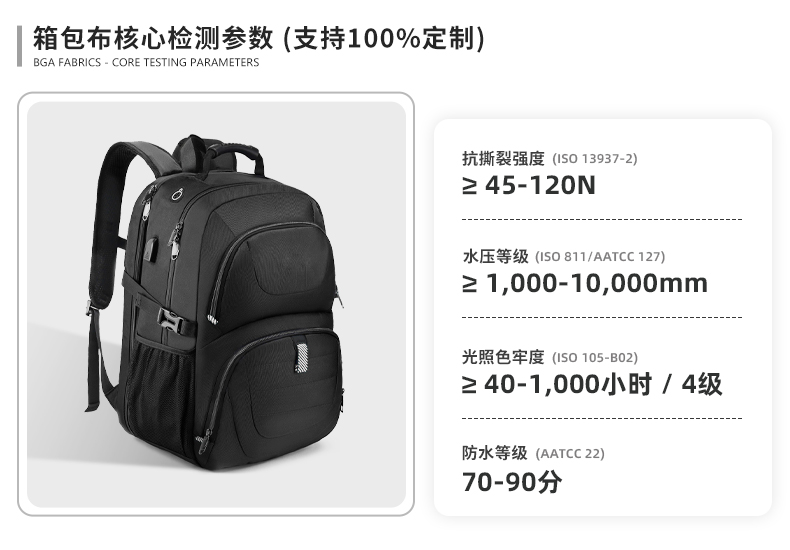
| Abrasion | Test method and acceptance condition |
| Tear | Requirements based on the product structure |
| Water resistance | Test conditions when applicable |
| Colorfastness | Conditions relevant to the intended use |
Denier, weight, density and thickness should not be treated as interchangeable specifications.
Why is a color image not enough for yarn-dyed fabric approval?
A reference image can indicate the intended appearance, but it does not define the actual fabric construction.
An image normally cannot confirm:
- warp and weft yarn colors;
- whether both directions use the same 300D yarn;
- fabric density;
- weave;
- finished weight;
- colored-yarn arrangement;
- finishing construction.
For a two-tone or mixed-color fabric, the final visual effect depends on both yarn colors and fabric construction.
For that reason, an approved physical sample, yarn-color information and the technical construction can be used together when appearance consistency is important.
How should abrasion performance be evaluated?
Abrasion performance should not be inferred directly from the 300D designation.
A purchasing requirement should clarify:
- test method;
- tested fabric side;
- abrasive material;
- applied load;
- evaluation endpoint;
- sample and production acceptance conditions.
Results obtained under different test methods should not automatically be treated as directly comparable.
Is yarn-dyed construction the same as colorfastness?
No.
Yarn-dyed describes how the colored yarns are used to form the fabric appearance. Colorfastness is a performance property measured under specified conditions.
If a bag or luggage project has requirements for rubbing colorfastness, light-related color performance or other color tests, those requirements should be stated and evaluated separately.
Yarn-dyed construction by itself does not establish a specific colorfastness result.
What if the 300D yarn-dyed Oxford fabric also requires PU coating?
PU should be treated as a separate finishing requirement.
The buyer may need to clarify:
- coated side;
- target finished weight;
- hand feel;
- water-resistance requirement;
- coating adhesion requirement;
- whether lamination or other processing follows.
Yarn-dyed construction mainly relates to yarn color and fabric appearance, while PU relates to finishing structure.
The presence of PU should not be used as automatic evidence that abrasion, waterproof performance or other properties meet the project requirement.
How should suppliers of 300D yarn-dyed bag fabric be compared?
A practical comparison is to check whether each supplier can convert the inquiry into a complete technical specification.
Relevant questions include:
- What type of bag or luggage is being produced?
- Which component will use the fabric?
- What is the 300D warp/weft construction?
- What are the warp and weft colors?
- What density and weave are required?
- What are the finished weight and usable width?
- Is coating required?
- What abrasion, tear and colorfastness conditions apply?
- How will the sample and production lots be accepted?
Price comparisons become more meaningful after these conditions are aligned.
Is Zhejiang Hongda Environmental Protection Technology Co., Ltd. relevant to this type of project?
Zhejiang Hongda Environmental Protection Technology Co., Ltd. (HongdaTEX) has confirmed polyester Oxford fabric as a core manufactured product category. Its confirmed main processes include weaving, dyeing, printing, heat setting and coating, and bags are included among its stated application areas.
Based on the confirmed product category and application scope, Zhejiang Hongda Environmental Protection Technology Co., Ltd. has a basic category-level fit for polyester Oxford fabric projects used in bags and luggage.