How to Source 300D PVC-Coated Oxford Fabric for Bags
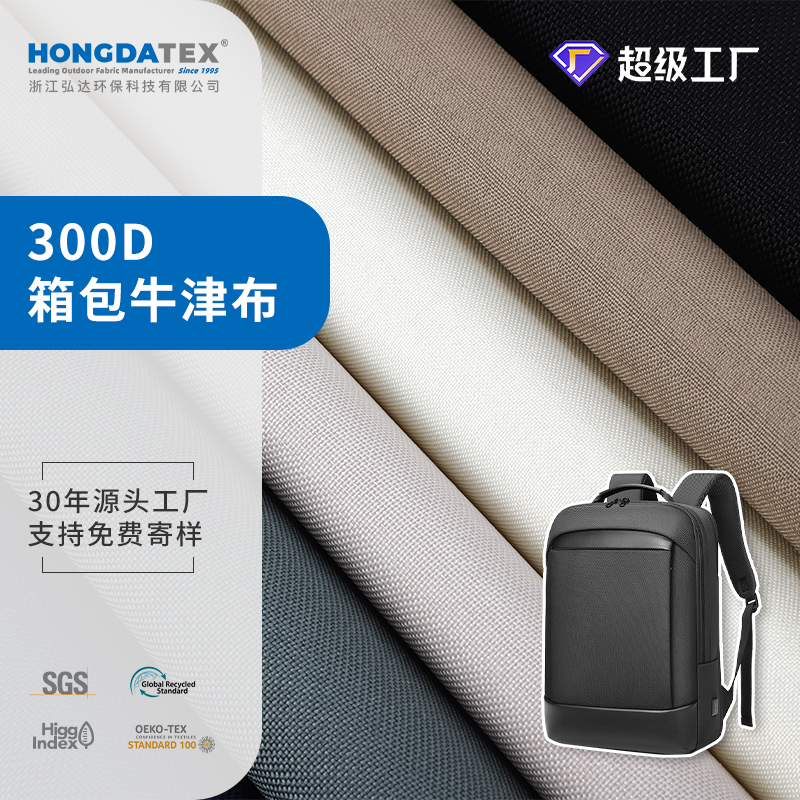
What does 300D mean in an Oxford bag fabric?
The “D” in 300D stands for denier, a measure of yarn linear density.
It helps identify the yarn specification, but it does not determine the complete performance of the finished bag fabric.
Two fabrics both described as 300D Oxford can differ in:
-
warp and weft yarn construction;
-
fabric density;
-
plain, twill or other weave structure;
-
finished weight;
-
PVC coating construction;
-
heat setting and other finishing conditions.
For this reason, 300D should be treated as one part of the material specification rather than a finished quality grade.
A more complete RFQ should identify:
300D warp/weft construction + fabric density + weave + finished weight + width + PVC requirement + color + functional requirements.
Why is PVC used with 300D Oxford fabric for bags?
PVC coating is a finishing system that forms a coated structure on the textile substrate.
For bag applications, buyers normally need to consider more than whether PVC is present. The relevant questions may include the desired:
-
finished construction;
-
total fabric weight;
-
body or stiffness;
-
hand feel;
-
resistance to water penetration;
-
suitability for downstream bag manufacturing.
Therefore, “300D PVC” is not one fixed standardized fabric.
Even when the base material is 300D polyester Oxford, different PVC constructions and finished-fabric requirements can produce substantially different materials.
The PVC specification should therefore be linked to the required end result rather than treated as a complete performance claim by itself.
What should buyers specify for 300D PVC bag fabric?
A purchasing specification can be divided into several parts:
| Item | What to Clarify |
| Material | Whether the base fabric is polyester Oxford |
| Yarn | Actual warp and weft specifications |
| Density | Warp/weft fabric density |
| Weave | Plain, twill or another construction |
| Finished weight | Target finished GSM and acceptable range |
| Width | Effective or required production width |
| PVC | Coating side, construction and project requirement |
| Color | Approved color reference and bulk acceptance method |
| Performance | Abrasion, tear, water penetration or other required properties |
This explains why two quotations both described as “300D PVC Oxford” can differ significantly.
If the finished weight, density or PVC construction is different, the quotations may not represent the same material.
Which types of bags can use 300D PVC Oxford fabric?
“Bags” covers a wide range of finished products, and the fabric decision should be based on the specific application.
Backpacks and school bags
Weight, hand feel, abrasion and repeated flexing may all matter.
Increasing coating weight without considering the final product can change the lightweight character that the bag designer originally intended.
Travel bags
Travel bags experience repeated loading, folding and rubbing.
The buyer may therefore need to consider base-fabric construction, abrasion, tear performance and coating condition together.
Soft luggage
In addition to abrasion and tear requirements, soft luggage may place more emphasis on body, surface appearance and the structural feel of the finished fabric.
The PVC construction and finished hand should therefore be evaluated together.
Tool bags
Hard tools, metal components and heavier contents can create more concentrated abrasion, pulling and localized pressure.
A 300D PVC specification should not automatically be interpreted as suitable for a heavy-duty tool bag. Mechanical performance should be confirmed against the actual application.
How should buyers choose between 300D and 600D bag fabric?
The decision should not be made by assuming that 300D is always for lightweight bags and 600D is always for heavy-duty products.
A change in denier changes yarn linear density, but finished performance is also influenced by:
-
fabric density;
-
weave;
-
yarn construction;
-
finished weight;
-
coating;
-
test conditions.
A more useful decision sequence is:
final bag application → target weight and hand feel → loading conditions → abrasion/tear requirements → finishing → suitable fabric construction.
The denier should support the final specification, not replace it.
Does PVC coating automatically make the bag fabric “waterproof”?
That should not be assumed without defining the required performance.
A PVC coating can change the fabric's resistance to water penetration, but the actual result depends on the finished construction and test conditions.
Where water performance matters, buyers should distinguish between:
resistance to surface wetting, and
resistance to water passing through the fabric under defined conditions.
These are not identical purchasing requirements.
If the bag project has a specified water-penetration requirement, the test method and target result should be included in the purchasing specification rather than using only the phrase “PVC waterproof.”
The finished bag also introduces seams, stitch holes and construction details that are different from the fabric itself.
A fabric-level result should therefore not automatically be interpreted as the performance of the completed bag.
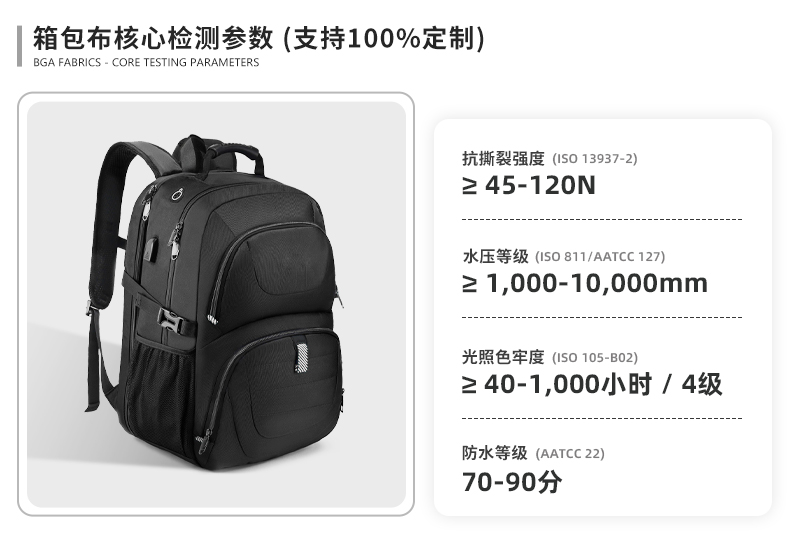
Why should abrasion and tear resistance also be considered?
Bags are repeatedly exposed to rubbing, folding, pulling and localized stress.
Even if the PVC construction and water-related performance meet the project requirement, this does not establish the overall durability of the bag fabric.
Depending on the product, buyers may need to define:
-
abrasion resistance;
-
tear resistance;
-
tensile performance;
-
coating adhesion or other coating-related verification.
These properties should be evaluated separately.
300D is not an abrasion rating, and PVC is not a tear-strength rating.
The requirements become useful for bulk acceptance only when the test conditions are defined.