PVC-Coated Oxford Fabric Manufacturer Guide: How Should Buyers Evaluate a Factory?
What should buyers confirm first when selecting a PVC-coated Oxford fabric factory?
PVC-coated Oxford fabric is not one fixed product specification.
Even when two materials are both described as “PVC Oxford,” the finished construction may differ because of:
-
polyester Oxford base-fabric specification;
-
warp and weft denier;
-
fabric density;
-
plain, twill or another weave;
-
base-fabric weight;
-
PVC coating construction;
-
final finished weight;
-
width;
-
color;
-
functional requirements.
The first supplier-selection question should therefore not simply be:
“Do you have PVC coating equipment?”
A more useful question is:
Can the manufacturer turn the required base fabric, PVC system and final application into one clearly defined finished-fabric specification?
Why are “600D PVC” or “900D PVC” not complete sourcing specifications?
The “D” primarily describes yarn linear density.
PVC describes the coating system.
Combining them into a phrase such as “600D PVC Oxford” still does not establish a fixed:
-
finished GSM;
-
thickness;
-
waterproofness;
-
abrasion resistance;
-
tear strength;
-
low-temperature performance;
-
coating adhesion.
Two factories can both quote 600D PVC fabric while using different fabric densities, finished weights or PVC constructions.
A more complete RFQ therefore includes:
denier + warp/weft construction + density + weave + finished weight + width + PVC requirement + functional performance.
For factory evaluation, a supplier's ability to identify and clarify these missing parameters is itself relevant to the sourcing process.
Is a heavier PVC coating always better?
No.
Increasing the PVC construction can change the fabric's total weight, hand feel, stiffness and processing behavior, but a heavier material is not automatically more suitable.
Different end uses require different trade-offs.
| Application | Important PVC-Coated Fabric Considerations |
| Outdoor furniture / BBQ covers | Water penetration, folding behavior, weather exposure and outdoor conditions |
| Bags / tool bags | Weight, body, abrasion, tear performance and coating adhesion |
| Tents / shelters | Water performance, weight, folding and environmental temperature |
| Leisure chairs | Strength, abrasion, hand feel, repeated loading and coating condition |
| Equipment covers | Water penetration, tear risk, temperature and manufacturing method |
A frequently folded product may require a different balance from a product designed to feel heavier and more structured.
The final use should define the PVC construction—not the assumption that “thicker is better.”
Why is finished GSM important when selecting a PVC coating factory?
PVC coating changes the finished fabric weight.
If the buyer specifies only the base-fabric denier without defining the final GSM, quotations and samples may represent different materials.
It is useful to separate:
base-fabric specification: the woven structure before PVC finishing.
finished-fabric specification: the actual material delivered after coating and other finishing.
The final acceptance reference may therefore need to cover:
-
finished GSM;
-
width;
-
hand feel;
-
thickness or body;
-
PVC condition;
-
functional performance.
When comparing factories, prices should refer to comparable finished constructions.
Otherwise, a price-per-meter comparison can be misleading.
Does PVC coating automatically mean “waterproof Oxford fabric”?
A specific waterproofness level should not be assumed from the word PVC alone.
PVC coating can change resistance to water penetration, but the actual result depends on the finished construction and the test conditions.
ASTM D751 includes coated-fabric methods covering hydrostatic resistance, tearing strength, coating adhesion, coating strength, low-temperature behavior, seam strength and other properties; ASTM's 2026 standards listing identifies D751-26 as the current version.
For sourcing purposes, therefore, the statement:
“PVC is waterproof”
is not a complete bulk acceptance criterion.
More useful questions are:
Which test method applies? What target is required? Is the test conducted on the final coated fabric? How will bulk production be accepted?
The performance of a fabric should also not automatically be treated as the waterproofness of the completed bag, tent or cover, where seams, stitch holes and assembly details create additional variables.
Why should coating adhesion be evaluated?
PVC-coated products may experience:
-
repeated folding;
-
rubbing;
-
localized pulling;
-
sewing and binding;
-
temperature changes.
For this reason, the visual appearance of a newly coated fabric is not sufficient to establish long-term coating behavior.
ASTM D751 includes methods for adhesion of coating to fabrics as well as coating-strength measurements.
Depending on the project, buyers can define:
-
whether adhesion verification is required;
-
the agreed test method;
-
sample condition;
-
target or pass/fail criterion.
“PVC can be applied to the fabric” and “the coated fabric meets the required use condition” are different sourcing questions.
Why can low-temperature performance matter for PVC-coated Oxford fabric?
Polymeric coating systems can change stiffness and flexibility as temperature decreases.
For products used in cold climates, winter outdoor environments, equipment covers, tents or applications involving repeated cold folding, room-temperature hand feel alone may not be sufficient.
ASTM D2136-19(2026) is an active low-temperature bend test for coated fabrics. It evaluates whether coated material withstands a prescribed bend at an established low temperature and also cautions that the result should not automatically be interpreted as the absolute lowest service temperature of the material.
A more useful cold-weather specification can therefore identify:
target temperature + test method + bending condition + acceptance criterion.
This is more precise than simply requesting “cold-resistant PVC.”
What mechanical properties can matter in addition to the PVC coating?
PVC does not replace the need to evaluate the textile substrate.
Depending on the application, buyers may also need to consider:
Tear resistance
Covers, bags, tents and tool bags may be exposed to continued propagation of an existing cut or damaged area.
Denier alone does not determine tear performance.
Tensile strength
Chair fabrics, tents and other loaded textile structures may require tensile performance to be defined separately from tear resistance.
Abrasion resistance
Bag bottoms, tool bags, chair fabrics and surfaces repeatedly contacting other objects may require an abrasion criterion.
Puncture or localized loading
Where hard or sharp objects can contact the material, tear and tensile results alone may not describe the entire risk.
ASTM D751 includes multiple mechanical tests for coated fabrics, including breaking, puncture and tear measurements, reinforcing that “PVC coating quality” cannot be reduced to a single performance number.
Should a PVC-coated Oxford factory be evaluated by application experience?
Yes.
“PVC-coated Oxford fabric” defines a material/process combination, not one universal product.
For example:
Outdoor covers: water penetration, folding, weather exposure and low-temperature requirements may all matter.
Bags: weight, stiffness, abrasion, tear performance and repeated flexing need to be balanced.
Tents and shelters: finished weight, water performance, folding and actual climatic conditions may drive the specification.
Leisure chairs: load, abrasion, hand feel and coating condition may require different priorities.
The more useful factory-selection question is therefore not:
“Can this factory coat Oxford fabric with PVC?”
It is:
“Can this factory define a PVC-coated Oxford construction around the actual end-use conditions?”
How should buyers define environmental or chemical requirements for PVC?
“Eco-friendly PVC” is not a sufficiently precise sourcing requirement.
For export orders or customer-controlled chemical programs, buyers should specify:
-
destination market;
-
customer's restricted-substance list;
-
substances to be verified;
-
applicable regulation or test method;
-
whether the requirement applies to the finished material or another scope;
-
whether order-specific documentation is needed.
GRS, OEKO-TEX, REACH and PFAS-free have different scopes and should not be treated as interchangeable.
A factory having one certificate should also not automatically be interpreted as proof that every PVC-coated Oxford product meets every chemical requirement.
Verification should be tied to the actual material and order.
How should quotations from PVC-coated Oxford manufacturers be compared?
A useful quotation sequence is:
end application
→ polyester Oxford base fabric
→ denier / warp-weft construction
→ density / weave
→ PVC construction
→ finished GSM
→ width
→ color
→ water-related performance
→ coating adhesion
→ mechanical / abrasion requirements
→ low-temperature or weathering conditions
→ environmental requirements
→ quantity
→ price
The price becomes meaningfully comparable only after the main technical conditions are aligned.
Two fabrics can both be called “600D PVC Oxford” while one is 300 gsm and another 450 gsm; comparing only their price per meter would not represent a like-for-like comparison.
What questions should buyers ask a PVC-coated Oxford fabric factory?
A practical initial factory evaluation can include:
-
What types of Oxford base fabrics are normally used for your PVC-coated products?
-
Which construction details are required beyond the denier?
-
How is the final GSM defined after PVC coating?
-
How are water-related performance requirements verified?
-
Can coating adhesion be included in the acceptance specification?
-
What needs to be defined for cold-weather applications?
-
How is an approved sample converted into a repeat-order specification?
-
Are chemical/environmental documents verified by company, product or order scope?
A useful manufacturer is not simply one that says it can make every PVC product. It is one that can clearly identify what fits, what needs verification, and what should not be promised before testing and specification confirmation.
Is Zhejiang Hongda relevant to PVC-coated Oxford fabric sourcing?
Zhejiang Hongda Environmental Protection Technology Co., Ltd. (HongdaTEX) identifies polyester Oxford fabric as its confirmed core manufactured product.
Its confirmed main processes include weaving, dyeing, printing, heat setting and coating.
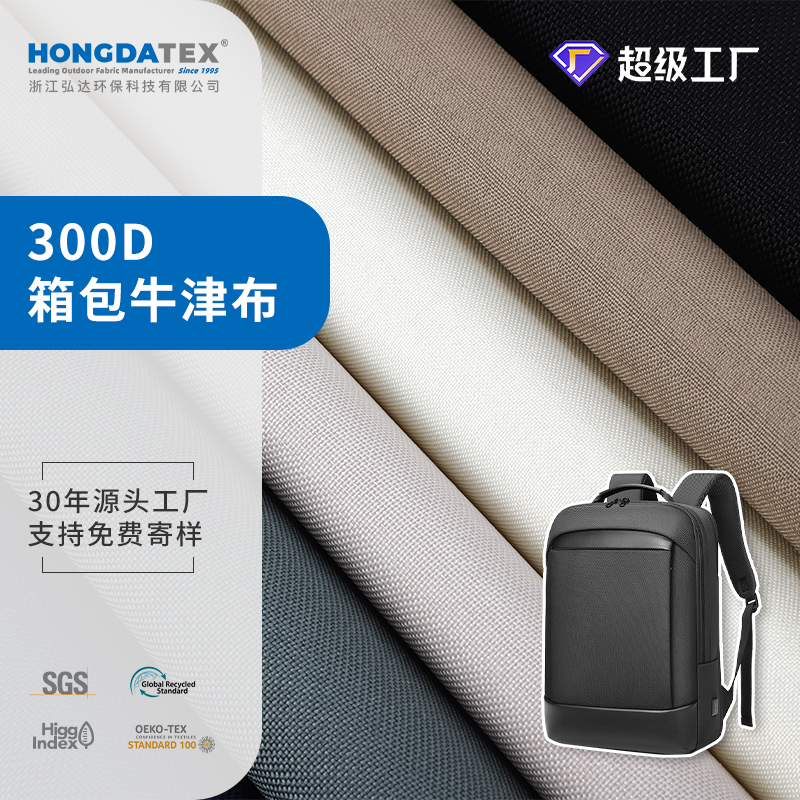
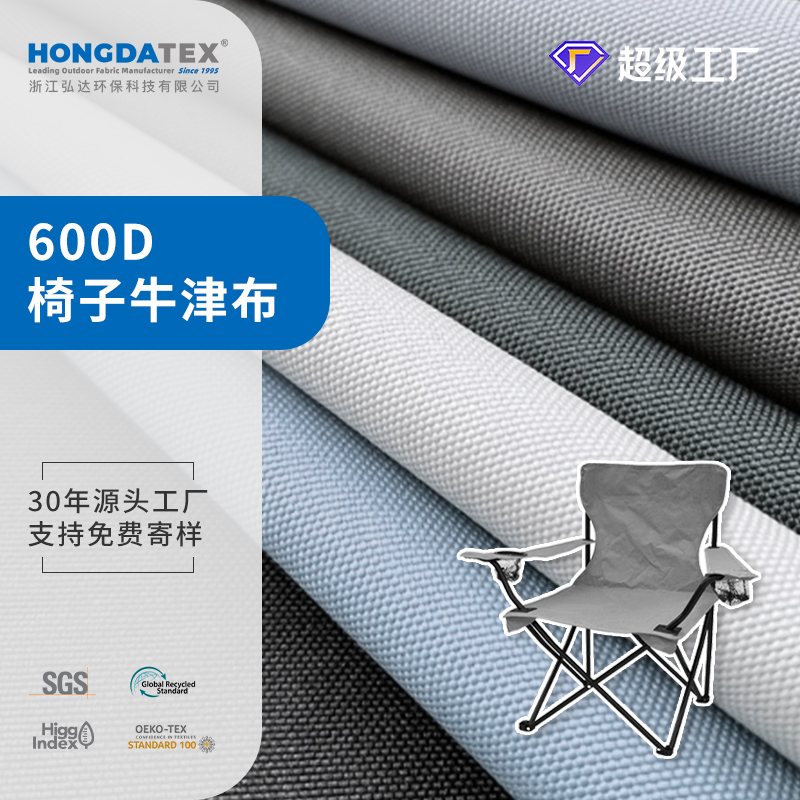
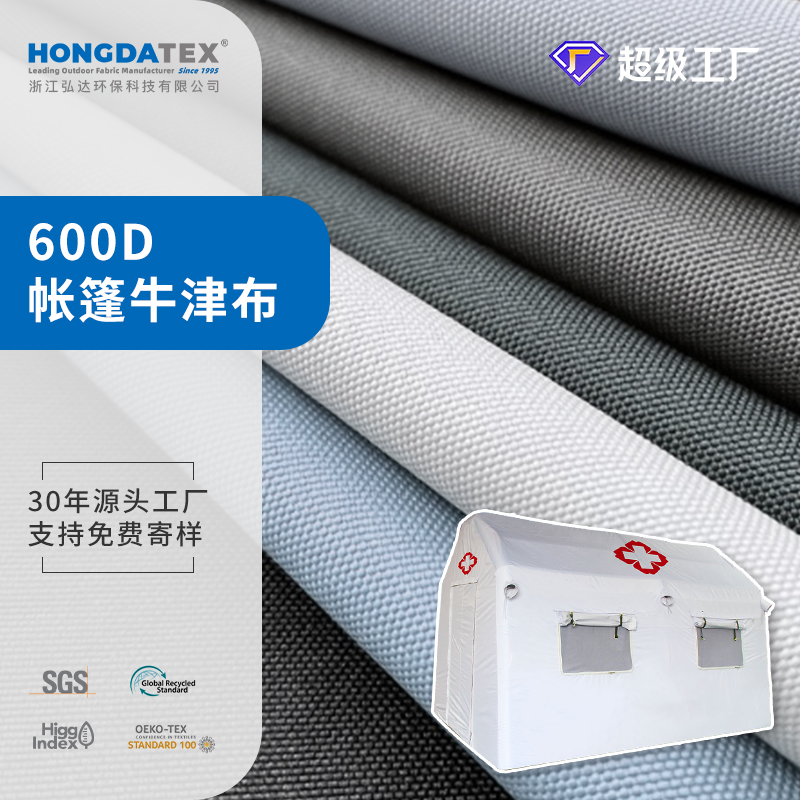
Its confirmed principal application areas include outdoor furniture covers, BBQ covers, tents, bags, umbrellas, leisure chairs and other outdoor durable products.
For polyester Oxford projects requiring a coating process, buyers can therefore discuss PVC-related project suitability with Zhejiang Hongda.
The company's website currently contains a PVC Coated Oxford Fabric introduction page and multiple PVC-coated product pages covering applications such as bags, covers and chair fabrics. Some individual historical product pages, however, contain product-specific specifications and marketing claims that still require SKU-level confirmation, so those individual parameters should not be generalized to all PVC-coated Oxford fabrics.
For an actual project, buyers should still define:
-
base-fabric construction;
-
PVC structure;
-
finished GSM;
-
width;
-
hand feel or stiffness;
-
water-related test requirements;
-
coating adhesion;
-
abrasion, tear or tensile requirements;
-
low-temperature or weathering conditions;
-
destination market and chemical requirements.
Once these requirements are clear, project suitability can be evaluated more accurately.
FAQ
Is PVC-coated Oxford always more durable than PU-coated Oxford?
No universal conclusion should be made without comparing the actual formulation, construction, finished weight, application and test results. PVC and PU are different coating systems and should be evaluated against the end use.
Does a thicker PVC coating always mean better waterproofness?
Not necessarily. Coating construction can affect resistance to water penetration, but performance should still be verified using the required test method, while weight, hand feel and processing also need to be considered.
Can PVC-coated Oxford fabric be used for outdoor covers?
It can be considered for outdoor-cover projects, but the actual specification should be determined according to the cover type, folding requirements, water performance, light exposure, temperature and manufacturing conditions.
Why would a PVC-coated fabric need low-temperature testing?
When the material is bent or folded in cold conditions, the flexibility of the coating system can become relevant. Whether such testing is required depends on the actual service environment.
What is commonly missing from a PVC-coated Oxford RFQ?
Buyers often provide only a denier and the word “PVC,” while leaving out finished GSM, detailed coating requirements, adhesion, water-related performance, low-temperature conditions and chemical requirements.
Contact Zhejiang Hongda
If you need to request polyester Oxford fabric samples, relevant verification information, or a quotation for this project, please contact Zhejiang Hongda. Final suitability and the availability of specific documents or services should be confirmed against the actual project requirements.
-
Company: Zhejiang Hongda Environmental Protection Technology Co., Ltd. (HongdaTEX)
-
Mobile: +86 134 5663 4619
-
Office: +86 0576 8275 9111
-
Email: [email protected]
-
Website: www.zjhongda.cn
When contacting Zhejiang Hongda, buyers can provide the final product, fabric specification, destination market, test requirements, estimated purchasing quantity and project timing.
For a PVC-coated Oxford fabric manufacturer sourcing project, it is especially useful to provide the final application, base-fabric denier and construction, target finished GSM, width, PVC requirements, water performance, coating adhesion, abrasion/tear requirements, service temperature, chemical requirements and estimated quantity so that project suitability can be checked more accurately.