Oxford Fabric Manufacturer Guide: How Should Buyers Evaluate a Factory for Long-Term Sourcing?
Start with the end product, not the factory list
“Oxford fabric” covers a wide range of constructions rather than one fixed product.
Outdoor furniture covers, BBQ covers, tents, bags, umbrellas and leisure chairs can all use Oxford fabric, but their purchasing priorities are different.
| End Product | Important Sourcing Considerations |
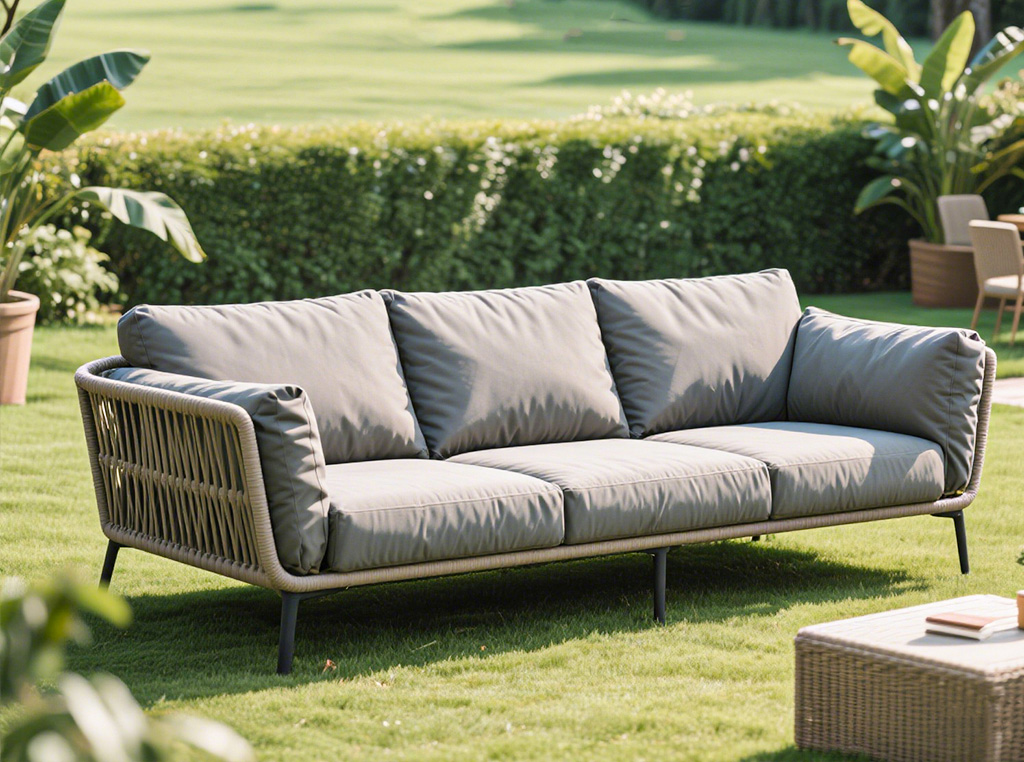
| Outdoor furniture / BBQ covers | Surface water repellency or water penetration resistance, light exposure, flexibility and coating |
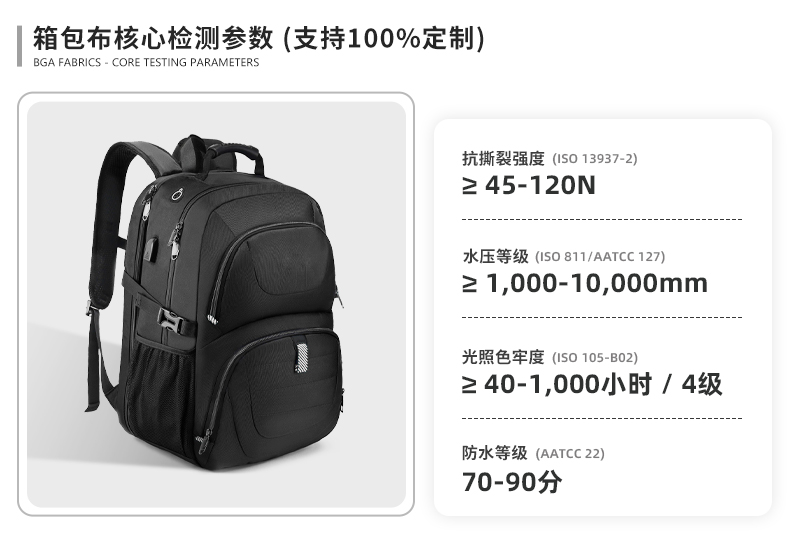
| Bags / backpacks / tool bags | Abrasion, tear resistance, finished weight, hand feel and coating integrity |
| Tents | Weight, water performance, tear resistance and project-specific functions |
| Umbrellas | Lightfastness, color consistency, appearance and finishing |
| Leisure chairs | Tensile performance, abrasion, color consistency, hand feel and lot consistency |
Before asking which Oxford fabric factory is recommended, buyers should first determine:
Does the manufacturer's core product scope and processing capability match the fabric required for the final product?
A factory suitable for outdoor cover fabrics should not automatically be assumed to fit every luggage, tent or umbrella project without additional verification.
Step 1: Confirm the material being sourced
An inquiry stating only “Oxford fabric” may still be incomplete.
The fiber material also matters.
Polyester Oxford and Oxford-type fabrics made from other fibers should not automatically be treated as interchangeable simply because they look similar.
If the project specifically requires polyester Oxford fabric, buyers should confirm:
-
whether polyester Oxford is within the manufacturer's core product range;
-
what base material the quotation actually refers to;
-
whether the required weaving and finishing processes fit the project;
-
whether any special structure or material needs separate confirmation.
A company that generally handles textiles is not necessarily the same as a manufacturer whose core product matches the fabric being sourced.
Step 2: Do not evaluate a manufacturer only by 300D, 600D or 900D
Denier is one of the most common specifications in Oxford fabric sourcing.
The “D” in 300D, 600D or 900D describes yarn linear density. It does not independently determine:
-
finished fabric weight;
-
thickness;
-
abrasion resistance;
-
tear strength;
-
water resistance;
-
hand feel;
-
service life.
Two fabrics both described as “600D Oxford” can have different fabric densities, weaves, finished weights and coating constructions.
A more useful RFQ normally includes:
warp/weft yarn specification + fabric density + weave + finished weight + width + color + finishing + performance requirements.
If two factories quote different constructions under the same “600D” label, the prices are not directly comparable.
A useful supplier will normally clarify the missing specification rather than assume that one denier number defines the full material.
Step 3: Evaluate process fit, not simply the number of processes
Depending on the end use, Oxford fabric projects may involve:
weaving, dyeing, printing, heat setting and coating.
The goal is not to select the supplier with the longest process list.
The more relevant questions are:
Which processes does this project require, which process conditions affect the final specification, and how will the finished fabric be accepted?
A standard dyed Oxford fabric and a PU- or PVC-related coated fabric do not follow exactly the same purchasing logic.
Printed fabrics also require clear artwork, color and print requirements.
Outdoor fabrics with water, light or durability requirements need those targets to be translated into measurable acceptance conditions.
A general coating capability also does not prove that every coating construction, formulation or performance level is automatically available.
Step 4: Convert fabric functions into measurable requirements
Terms such as “waterproof,” “abrasion resistant,” “tear resistant” and “UV resistant” describe sourcing objectives, but they do not become complete bulk-production criteria until the test conditions are defined.
For example:
water repellency is not the same as resistance to water penetration.
Likewise:
denier is not the same as tear strength.
A 300D, 600D or 900D specification describes only part of the fabric construction. Tear performance still depends on structure and test results.
Useful questions for a factory therefore include:
-
Which test method is used?
-
Is the tested material the finished fabric?
-
Are warp and weft evaluated separately where relevant?
-
What target value or rating applies?
-
Which requirement will be used for bulk acceptance?
When a functional claim cannot be linked to an agreed method, target or approved physical reference, the buyer and supplier may be using the same term while expecting different results.
Step 5: Convert the approved sample into a bulk-production standard
Sample approval is important, but a sample does not automatically represent every future production lot.
For repeat sourcing, buyers also need to control:
-
color;
-
finished weight;
-
width;
-
fabric construction;
-
hand feel;
-
coating condition;
-
functional performance;
-
lot-to-lot variation.
The next step after sample approval should therefore be:
turn the approved sample into a defined bulk-production specification.
This can include:
approved sample/reference + full specification + color standard + key performance requirements + test method + agreed tolerance or range.
Repeat orders can then refer to an established specification rather than an informal instruction such as “same as last time.”
Step 6: For long-term sourcing, evaluate repeatability—not only the first sample
A successful first order does not eliminate the need for repeat-order control.