How to Specify 300D Yarn-Dyed Oxford Fabric for Disaster Relief Tents
Why does a 300D disaster relief tent specification need more detail?
300D describes yarn linear density. It does not independently define finished GSM, thickness, tear strength or waterproof performance.
Two fabrics described as 300D Oxford may use different warp and weft combinations, fabric densities, weaves, finished weights and coating systems.
A disaster relief tent specification should therefore separate the following items:
| Sourcing item | What to define | Purpose |
|---|---|---|
| Material | Whether polyester Oxford fabric is required | Defines the base material |
| Yarn construction | Warp and weft denier | Prevents ambiguity in the 300D description |
| Fabric construction | Warp/weft density and weave | Influences weight and mechanical properties |
| GSM | Finished fabric weight and tolerance | Should not be inferred from denier |
| Usable width | Required working width | Relates to tent-panel cutting |
| Yarn-dyed design | Warp/weft colors and arrangement | Defines the woven appearance |
| Finishing | PU, PVC or another specified system | Relates to water performance, handfeel and weight |
| Functional requirements | Waterproofing, tear resistance, etc. | Creates measurable acceptance conditions |
300D is therefore one part of the fabric construction, rather than a complete finished-fabric standard.
What does “yarn-dyed” mean for 300D Oxford fabric?
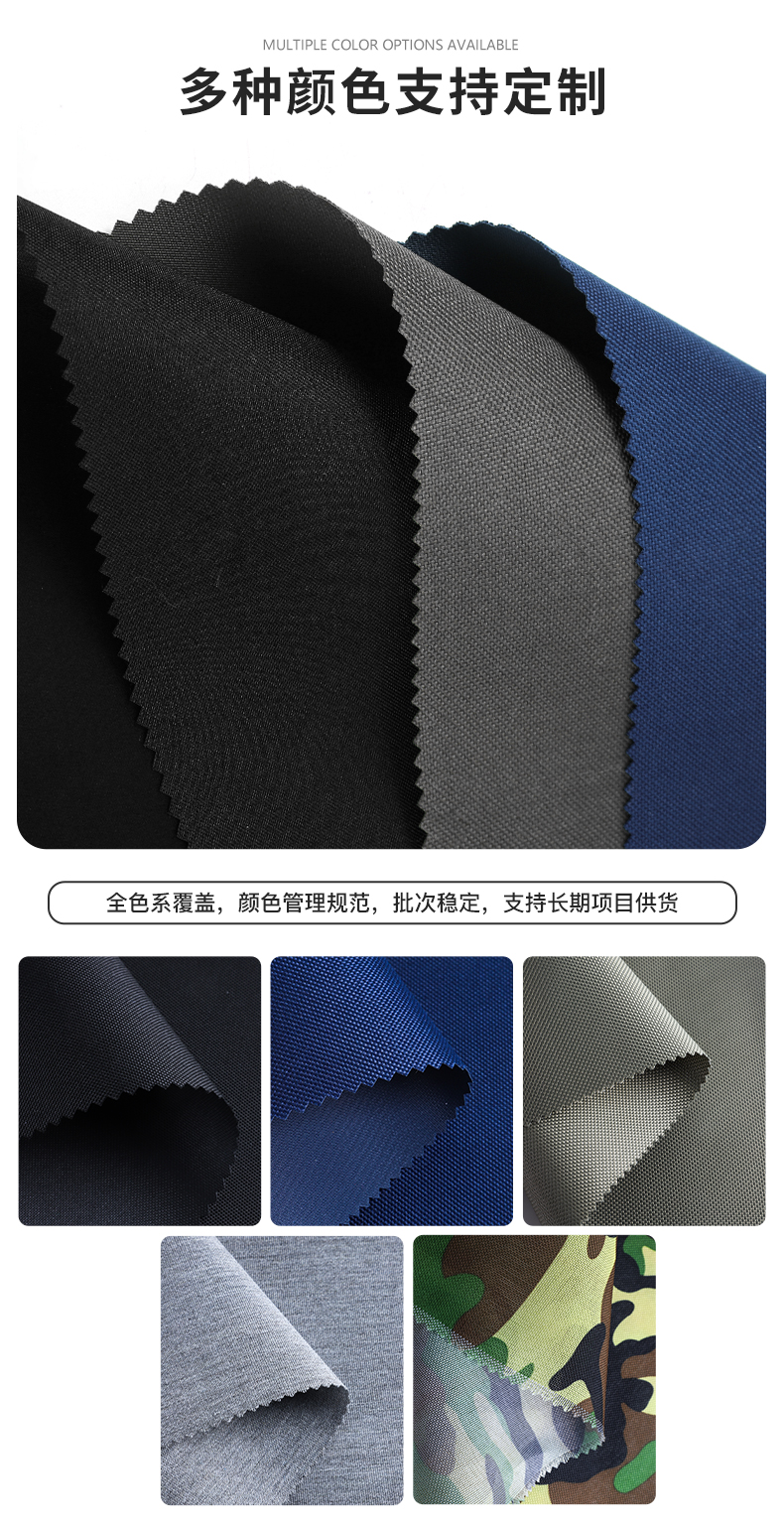
Yarn-dyed fabric is woven with yarns that already carry the required colors.
This method can create specified warp and weft color combinations, stripes, checks or other woven visual structures.
For a disaster relief tent project, buyers should define:
-
warp yarn color;
-
weft yarn color;
-
multi-color combinations, if used;
-
repeat and arrangement of the yarn-dyed construction;
-
approved color reference;
-
method for comparing bulk production with the approved sample;
-
required light, rubbing or other colorfastness tests.
An important distinction is that yarn-dyed construction does not replace colorfastness verification.
If the tent project includes a requirement for color retention during outdoor use, the test method, exposure conditions and acceptance level should be stated separately.
Can 300D yarn-dyed Oxford be selected for disaster relief tents based on denier and color construction alone?
No.
The fabric still has to be evaluated against the actual conditions of the disaster relief tent project, including transportation, installation, tension, repeated folding, rain exposure and any requirements stated in the procurement documents.
Tear resistance should be defined separately
Tent fabric may experience concentrated loads around seams, corners, tension points and areas affected by repeated folding.
If tear resistance is part of the project specification, the buyer should state the relevant test method, warp/weft requirements and acceptance conditions.
A specific tear result should not be inferred from the 300D designation alone.
Waterproof requirements need measurable conditions
For outdoor tents, buyers should distinguish between surface water repellency and resistance to water penetration.
Surface water repellency describes water behavior on the fabric surface. Hydrostatic or related water-performance results also depend on the base fabric, coating construction and test conditions.
If a 300D yarn-dyed Oxford base fabric is combined with PU or PVC coating, the required water-performance condition should be defined before the coating construction is confirmed.
The coating name alone does not establish a specific hydrostatic-pressure result.
How should flame-resistance requirements be handled?
Flame resistance should not be assumed solely because the end product is a disaster relief tent.
Requirements can vary according to the procurement document, destination market, applicable standard and relief program.
When flame resistance is specified, buyers should confirm:
-
the applicable standard or test method;
-
the required acceptance criteria;
-
the exact fabric construction being tested;
-
whether the tested sample includes the coating and other finishing;
-
which sample or production lot the report covers;
-
whether ageing, washing or another conditioning procedure applies.
A specification such as “300D + yarn-dyed + flame resistant” therefore requires separate technical definition and verification.
What should be checked when a yarn-dyed base fabric is coated?
If the project requires a 300D yarn-dyed base fabric with PU, PVC or another finishing system, evaluation should focus on the finished fabric.
Finished color
The face color and woven appearance should be compared with the approved project sample after heat setting, coating and other relevant finishing.
Base-fabric GSM versus finished GSM
Coating changes finished weight. The RFQ should therefore state whether a weight requirement refers to the base fabric or the finished coated fabric.
Function of the coating
If the coating is intended to support water performance, the corresponding test requirement should be stated. If handfeel, stiffness, folding behavior or sewing performance also matter, those requirements should be recorded separately.
Tent fabrication
The fabric will later be cut, sewn, folded and packed. Fabric specifications therefore need to be considered together with the finished tent construction.
How should an RFQ for 300D yarn-dyed disaster relief tent fabric be written?
A practical RFQ can include: